



A lot of people searching for help in Dallas or Euless arrive at the same difficult moment. A loved one is missing work, classes are slipping, anxiety is getting worse, or opioid use has started to shape every day. The search for answers often begins with one urgent question, then quickly turns into ten more.
That's where confusion usually starts. Someone might search for IPS Dallas TX because they've heard employment support can help recovery, but they may also need therapy, structure, medication support, or a program that fits around work and family life. Recovery rarely depends on one service alone. People often need a stable clinical foundation before they can rebuild confidence, routine, and employment.
This guide is meant to make that path easier to understand. It walks through what IPS means, how it connects to intensive outpatient treatment, and how adults in the Dallas-Fort Worth area can think through next steps with less fear and more clarity.
Table of Contents
- Navigating the Crossroads of Recovery in Dallas
- Understanding Your Support Options IPS and IOP
- Choosing the Right Level of Care in the DFW Area
- The Pillars of an Effective Intensive Outpatient Program
- Specialized Care for Dual Diagnosis and Opioid Use
- Navigating Insurance for Treatment in Texas
- Your First Step to a New Beginning Starts Here
Navigating the Crossroads of Recovery in Dallas
A common Dallas story starts subtly. An adult keeps promising to cut back on drinking or pills, but the cycle keeps repeating. A spouse notices mood swings. A parent sees panic, depression, or isolation alongside substance use. Everyone knows something has to change, but no one knows which kind of help comes first.

In Dallas and nearby Euless, the treatment options can feel crowded. Some programs focus on detox. Others focus on therapy. Some people need support for opioid dependence, while others need help managing trauma, bipolar disorder, or severe anxiety at the same time. Employment concerns often sit in the background, even though work stability can shape self-esteem, housing, and long-term recovery.
That's why many families end up searching several terms in one night. They look for outpatient rehab, dual diagnosis care, structured therapy, and vocational support. A person may begin with Dallas addiction treatment options in Dallas County and still wonder how treatment connects to daily life after the first crisis settles down.
Why this stage feels so overwhelming
The hardest part usually isn't admitting that help is needed. It's figuring out what kind of help fits the actual circumstances.
- Clinical needs can overlap: A person may be dealing with depression and alcohol misuse, or opioid dependence and panic attacks.
- Life doesn't stop: Many adults can't leave jobs, children, or school responsibilities for long periods.
- Fear blocks action: Families worry about cost, stigma, privacy, and whether treatment will work.
Practical rule: The best next step is usually the one that reduces chaos first. Once someone has more emotional and physical stability, other goals become easier to reach.
Recovery includes more than stopping substance use
People often think treatment only means getting through withdrawal or attending therapy sessions. Those pieces matter, but recovery also touches sleep, relationships, daily routine, decision-making, and the ability to return to work with confidence.
That broader view is especially important for people exploring IPS in Dallas, TX. Employment support can be a powerful part of healing, but it works best when the person also has the emotional structure to handle stress, setbacks, and triggers. That connection matters throughout the rest of this guide.
Understanding Your Support Options IPS and IOP
Individuals seeking IPS Dallas TX are usually looking for a path back into ordinary life. Individual Placement and Support, or IPS, is an evidence-based supported employment model for people with serious mental illnesses such as schizophrenia, bipolar disorder, and depression. It shows a 60% higher rate of competitive employment compared to traditional vocational programs, and workers maintain employment for an average of 18 months through its structured, individualized framework, according to the IPS model overview from IPS Works.
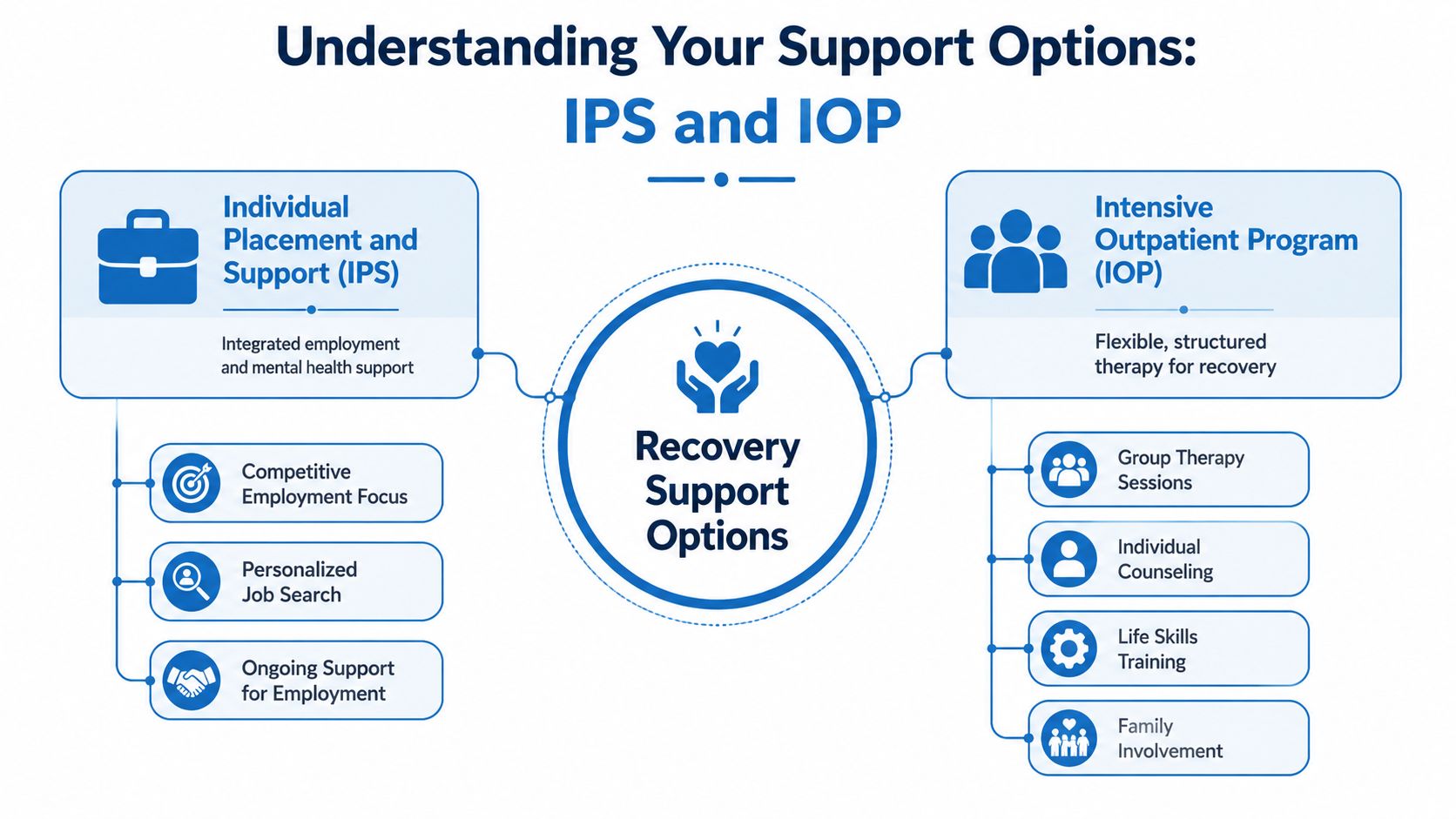
IPS focuses on employment, but employment rarely stands alone. If someone is struggling with cravings, mood swings, trauma symptoms, or unstable routines, the job search itself can become another stress point. That's where an Intensive Outpatient Program, or IOP, often becomes the foundation.
What IPS does best
IPS is designed to help people pursue meaningful work while receiving mental health support. Instead of treating employment like a distant reward that comes after every symptom disappears, IPS treats work as part of recovery.
Its core strengths include:
- Competitive employment focus: The goal is real-world work, not isolated practice tasks.
- Personalized job search: Support is adapted to the person's strengths, interests, and readiness.
- Ongoing support: Help doesn't stop the day someone gets hired.
A Dallas-area gap often appears here. As noted in this discussion of integrated vocational and behavioral care, the integration of vocational support with mental health and substance use treatment is under-discussed in local content, even though integrated care produces better outcomes than treating those needs separately.
Why IOP often comes first
IOP gives people a structured place to stabilize while still living at home. That matters because recovery skills need to work in real life, not only inside a controlled setting.
Someone in IOP may spend part of the week learning how to:
- manage triggers at work,
- handle conflict without using,
- build routines that support sleep and medication adherence,
- respond to cravings or emotional spirals before they become crises.
For readers who want a simple breakdown of the model, this overview of how IOP therapy works can help connect the clinical side to everyday demands.
Employment support helps people move forward. Clinical structure helps them stay steady enough to do it.
How the two fit together
IPS and IOP aren't opposites. They solve different problems.
| Support Type | Primary Purpose | Best Used For |
|---|---|---|
| IPS | Building or returning to employment | People who need job-focused support tied to mental health recovery |
| IOP | Building emotional and behavioral stability | People who need structured therapy while maintaining daily responsibilities |
A person in early recovery may not be ready for interviews, schedule pressure, or workplace stress. Another person may be clinically stable enough that vocational support becomes the next meaningful step. The key idea is simple. Work goals tend to hold better when treatment has already started building stability underneath them.
Choosing the Right Level of Care in the DFW Area
A Dallas parent may be trying to keep a job, care for children, and stop a drinking pattern that is getting harder to hide. A college student in Euless may know weekend use has turned into something more serious, but still needs to stay in class. In both situations, the next question is practical. How much support will help them stabilize and keep going?
Choosing the right treatment level depends on structure, home safety, and the need for medical or psychiatric supervision. In the DFW area, adults are often deciding among inpatient care, partial hospitalization, and intensive outpatient care.
Treatment Levels Compared
| Feature | Inpatient / Residential | Partial Hospitalization (PHP) | Intensive Outpatient (IOP) |
|---|---|---|---|
| Living arrangement | Client stays at the treatment facility | Client lives at home and attends day treatment | Client lives at home and attends structured sessions several times per week |
| Daily intensity | Highest | High | Moderate but structured |
| Best fit | Severe instability, unsafe environment, or need for around-the-clock support | Strong need for daily structure without overnight stay | Need for support while keeping work, school, or family responsibilities |
| Real-world practice | Limited during stay | Moderate | High, because clients apply skills at home and in the community |
How many adults decide
Clinicians usually look at a few core questions first. Is the person medically safe? Can they stay safe between sessions? Is home supportive enough for recovery work? How much structure is needed to interrupt the current pattern?
A person who is actively using heavily, medically unstable, or at risk of harm may need inpatient treatment first. Someone with more day-to-day stability, but who still needs frequent therapeutic support, may fit PHP. IOP often serves adults who need meaningful clinical care while continuing to live at home and stay connected to ordinary responsibilities.
That real-life connection is part of the point. Recovery is stronger when treatment can be tested where stress occurs, whether that is at home, in traffic, in class, or after a difficult shift at work.
Signs IOP may be the best fit
IOP is often appropriate when the person:
- Has a stable place to live: Home does not need to be perfect, but it needs to be safe enough for recovery work.
- Needs treatment that fits daily life: Work, parenting, school, or caregiving duties still need attention.
- Can participate regularly: The person is able to attend sessions, practice skills, and stay in contact with the treatment team.
- Needs more support than weekly therapy provides: Symptoms, cravings, relapse risk, or emotional instability call for a higher level of structure.
Many families find it easier to decide after reviewing the difference between inpatient and outpatient treatment.
The most effective level of care matches the person's specific risks, daily demands, and ability to engage in treatment.
Why level of care affects long-term progress
Level of care does more than determine a schedule. It shapes how recovery skills are built. Inpatient care can create immediate safety. PHP can add strong daily structure. IOP gives many adults a place to practice new habits while life is still happening around them.
That matters for employment goals too. Readers searching for ips dallas tx are often thinking about work, independence, and long-term stability. IPS helps a person pursue a job or return to one. IOP helps create the steadiness that makes that goal more realistic, such as emotional regulation, consistent attendance, clearer communication, and better stress management.
A simple way to view it is this. IPS helps with the road back to work. IOP helps strengthen the foundation under that road. For many people at Maverick, that combination can support recovery that holds not only in treatment, but also in family life, school, and employment.
The Pillars of an Effective Intensive Outpatient Program
A good IOP does more than fill a schedule. It creates repeatable habits, emotional insight, and practical coping tools. When those pieces are missing, treatment can feel supportive in the moment but hard to carry into real life.
The strongest programs usually rest on four working parts rather than one big promise.
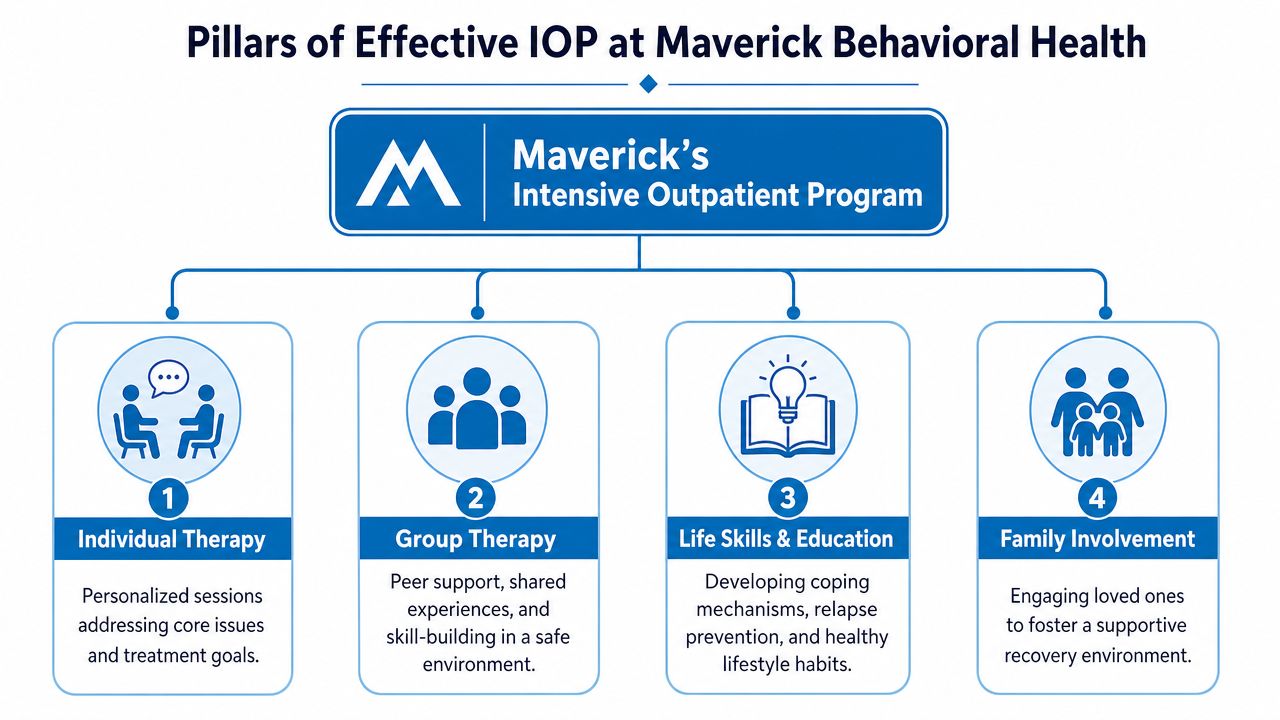
Individual therapy
One-on-one counseling gives clients a place to say what they won't say in a group. Shame, grief, resentment, trauma, and fear often surface here first. That privacy matters because many people use substances to manage pain they've never fully named.
In individual sessions, clinicians can help clients connect patterns. A person may notice that cravings rise after conflict, loneliness, or exhaustion. Another may realize that untreated anxiety has shaped drinking for years.
Group therapy
Group work helps people practice honesty, boundaries, and communication in real time. It also challenges one of addiction's strongest lies, which is that no one else could possibly understand.
A strong group setting can help clients:
- Recognize patterns faster: Others often notice blind spots before the individual does.
- Build accountability: Attendance and participation create rhythm.
- Practice healthy feedback: Clients learn how to speak directly without attacking or shutting down.
Recovery tends to deepen when a person can hear their own story in someone else's words.
Life skills and recovery education
Some clients arrive in treatment with strong careers and weak coping skills. Others have lost routine entirely. Either way, recovery needs structure outside the therapy room.
Useful IOP education often includes:
- Relapse prevention planning that identifies triggers, warning signs, and responses.
- Emotional regulation skills for stress, anger, sadness, and panic.
- Daily living habits such as sleep routines, nutrition, and scheduling.
- Communication tools for work, family, and social situations.
This pillar becomes especially important for people hoping to return to work. Before someone can benefit from job-focused support, they often need to relearn how to manage time, tolerate frustration, and follow through under pressure.
Family involvement
Addiction and mental health symptoms rarely affect one person alone. Loved ones may feel exhausted, confused, angry, or overly responsible. Without guidance, families can fall into cycles of rescuing, conflict, or silence.
Family involvement helps when it teaches both support and limits. Productive involvement may include education about substance use, healthier communication, and clearer expectations around recovery. The goal isn't blame. The goal is a home environment that supports change instead of accidentally undermining it.
What people should look for
Not every IOP is equally thorough. A thoughtful program should offer a blend of personal therapy, peer support, skills training, and family engagement. When those pillars work together, treatment becomes more than symptom management. It becomes preparation for ordinary life, including relationships, housing, and eventually employment stability.
Specialized Care for Dual Diagnosis and Opioid Use
A person may walk into treatment knowing they need help with alcohol or opioids, yet the full picture often includes panic attacks, trauma, depression, or unstable mood. In that situation, recovery works best when care reflects real life. Mental health symptoms and substance use tend to affect each other day after day.
That is why dual diagnosis care matters. Integrated treatment addresses substance use and mental health concurrently, giving the clinical team a clearer view of what is driving distress, cravings, avoidance, or shutdown. For someone in an IOP, that matters in practical ways. Better symptom control can make it easier to attend groups, stay engaged in therapy, sleep more consistently, and rebuild enough stability to return to normal responsibilities over time.

Why both conditions need treatment together
Co-occurring disorders are common, and many people go without adequate care for both. As noted earlier, this gap helps explain why treatment can feel incomplete when only one part of the problem is addressed.
Consider a person with untreated trauma. They may stop using for a short period, then feel flooded by nightmares, hypervigilance, or emotional numbness. Someone with panic symptoms may start avoiding work, family obligations, or job searches because ordinary stress feels physically unbearable. An IOP can provide the clinical structure to address those symptoms directly through therapy, psychiatric support, and routine. That stability often becomes the foundation for the next phase of recovery, including employment support through the IPS model, where success depends on being well enough to show up, focus, and keep going through setbacks.
How MAT helps with opioid recovery
Opioid use disorder brings a strong physical component. Cravings, withdrawal, and fear of getting sick can narrow a person's world until daily survival becomes the only focus.
Medication-Assisted Treatment, or MAT, helps reduce that physical instability. In many cases, medications such as Suboxone lower cravings and ease withdrawal enough for a person to participate more fully in counseling, group therapy, and home responsibilities. Medication does not do all the work. It creates room for the work.
That distinction matters. If IOP is the place where someone relearns structure, coping, and follow-through, MAT can make it possible to benefit from that process with a clearer mind and steadier body.
Common questions families ask
Is MAT replacing one drug with another?
MAT is a physician-guided treatment used to reduce withdrawal, cravings, and overdose risk while a person builds recovery skills.Does therapy still matter if medication is involved?
Yes. Medication supports stability. Therapy helps a person understand patterns, process pain, and practice different responses.What if mood symptoms continue after substance use slows down?
Continued mood symptoms often indicate a need for ongoing mental health treatment as part of the recovery process.
For families, it can help to picture treatment as building a house in the right order. Medication may steady the ground. IOP strengthens the frame with therapy, routine, and accountability. IPS-style vocational support can then help a person return to work in a way that fits their recovery, rather than pushing employment before enough stability is in place.
Some families also explore broader wellness resources while learning about behavioral care. For readers interested in related approaches to mental health support, this guide on understanding peptide therapy for mood offers additional context.
Navigating Insurance for Treatment in Texas
Cost worries stop many people before treatment even begins. Families often assume care will be unaffordable, or they fear getting trapped in a long financial process before receiving clear answers. In practice, the first step is usually much simpler than expected.
Many outpatient programs in Texas work with major PPO insurance plans and help verify benefits before admission. That matters because people shouldn't have to decode policy language while also managing a mental health or substance use crisis. A benefits check can clarify what a plan may cover, what level of care fits medically, and what questions still need to be answered.
Why accreditation matters
Price isn't the only issue. Quality matters too.
Outpatient rehab facilities with Joint Commission accreditation report 35% higher long-term recovery success rates compared to non-accredited centers, due to standardized clinical quality and safety protocols, according to Maverick's Euless location page. Accreditation doesn't guarantee a perfect experience, but it does signal that the program follows rigorous standards for care, safety, and accountability.
A calmer way to handle the financial side
Families often benefit from treating insurance verification as an information-gathering step rather than a commitment. That early call can help answer practical questions such as:
- What level of care may be covered
- Whether outpatient treatment is a good fit
- What out-of-pocket costs might look like
- How quickly an assessment can be arranged
That kind of clarity lowers panic. It also helps families make decisions based on real information instead of worst-case assumptions.
Your First Step to a New Beginning Starts Here
The first move doesn't need to be dramatic. It just needs to happen. For many people in Dallas, Euless, and the wider DFW area, that means making one confidential phone call and letting a trained admissions advisor help sort out the rest.
When people wait, they often believe they need every answer before reaching out. They don't. A call can help determine whether the main need is structured outpatient support, help with opioid recovery, care for co-occurring mental health symptoms, or a different level of treatment altogether.
What the process usually looks like
Make the confidential call
A private conversation can begin with the basics. What's been happening, what substances are involved, whether mental health symptoms are present, and what kind of schedule the person needs.Speak with a caring advisor
An admissions professional can help the family understand possible treatment paths without pressure. That includes discussing outpatient options, schedule needs, and insurance questions.Schedule a complimentary assessment
The assessment helps determine the safest and most appropriate level of care. It also gives the person a chance to be heard without judgment.
Why acting sooner helps
People rarely call on a random good day. They usually reach out after a hard weekend, a frightening conversation, a relapse, or a moment when the consequences are finally impossible to ignore. That moment matters because motivation is often strongest when the cost of waiting becomes clear.
Help is most effective when the person reaches out before the next crisis decides for them.
For readers focused on IPS Dallas TX, it's worth remembering one central truth. Employment goals, family repair, and emotional stability often begin with clinical support that makes daily life manageable again. Once that base is in place, the rest of recovery has somewhere solid to stand.
For anyone ready to take that step, Maverick Behavioral Health offers compassionate outpatient support for adults in Euless and the Dallas-Fort Worth area. A confidential call to (888) 385-2051 can help clarify treatment options, verify insurance, and schedule a complimentary assessment without pressure or judgment.