


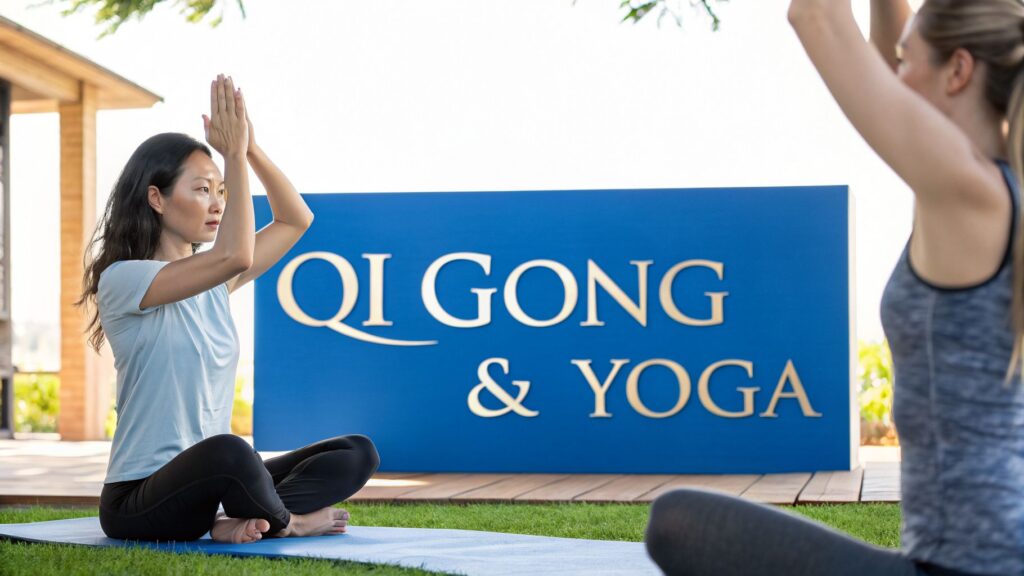
The road to recovery isn't just a mental battle; it's a journey that involves your entire being. Here in the Dallas-Fort Worth area, we've seen firsthand how ancient mind-body practices like qi gong and yoga can be incredible allies in this process. They don't replace clinical treatment but act as powerful, grounding tools that restore the crucial link between how you feel physically and emotionally.
These practices build a strong support system that complements the work you do in our Intensive Outpatient Program (IOP) or Partial Hospitalization Program (PHP) right here in Euless.
Bridging Mind and Body for a Stronger Recovery
True healing from addiction or mental health struggles goes deeper than talk therapy alone. It has to address the stress, anxiety, and trauma that get physically stored in the body over time. This is exactly where qi gong and yoga shine, offering practical tools for residents of Dallas, Euless, and surrounding communities.
Through gentle movement, focused breathing, and present-moment awareness, these disciplines teach you how to build a resilient foundation for a healthier life. It's about learning a new way to live in your own skin, right here in your local community.
For many in the Dallas-Fort Worth area, the challenge is finding outpatient care that feels both practical and deeply effective. Integrating these practices into our programs gives you a tangible way to handle daily triggers and regulate your emotional state. Instead of getting swept away by a craving or a wave of anxiety, you learn how to notice the feeling, sit with it, and let it pass without taking over.
This internal space is where real change happens. It’s what allows you to make conscious, healthy choices, moment by moment.
The diagram below shows how we view this relationship: mind-body healing is the central pillar that connects holistic practices like yoga and qi gong with the structured, evidence-based care you receive in a clinical setting at our Euless center.
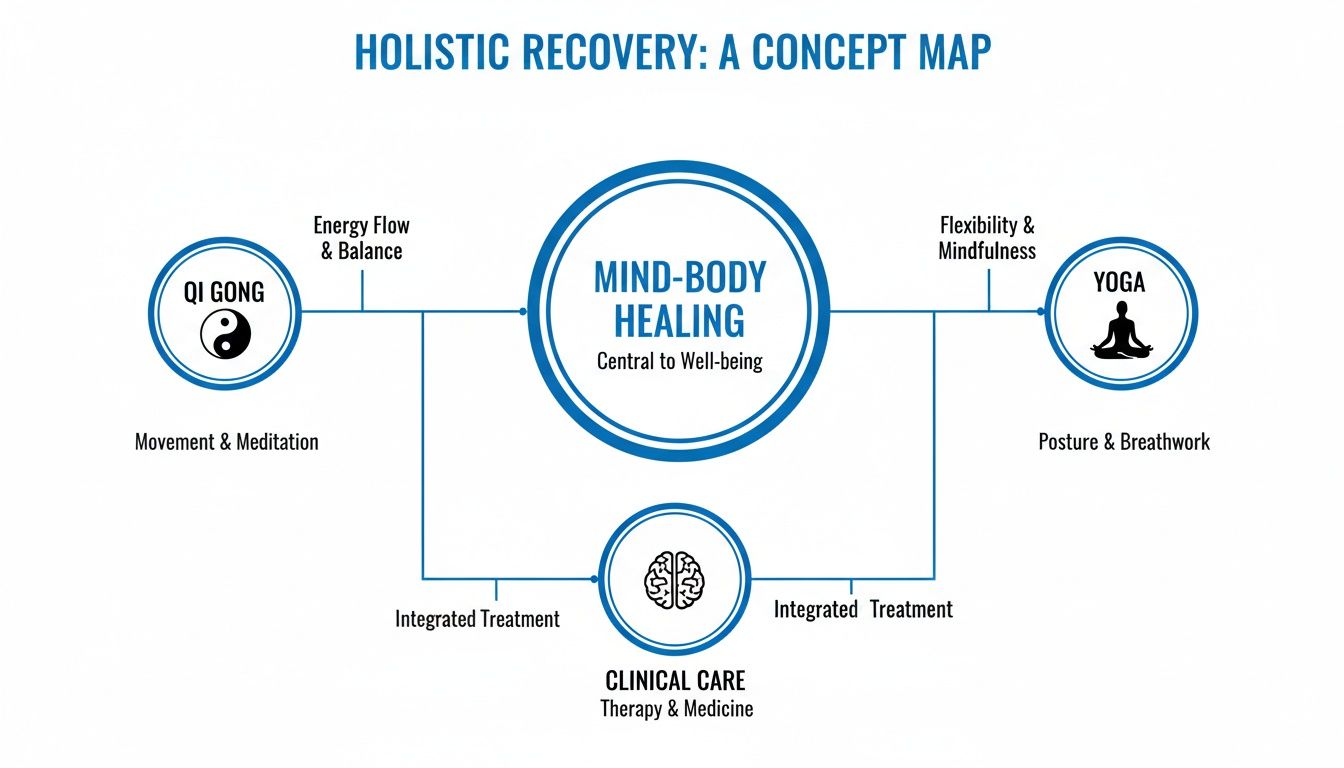
The real insight here is that you don't have to choose between modern therapy and these ancient traditions. The most sustainable recovery happens when we combine their strengths.
Qi Gong vs Yoga At a Glance
While both practices unite the mind and body, they come from different traditions and have unique focuses. Think of them as two different languages that both speak to the nervous system. This table offers a quick comparison to help you see the subtle but important distinctions.
| Aspect | Qi Gong | Yoga |
|---|---|---|
| Core Philosophy | Rooted in Traditional Chinese Medicine, focuses on cultivating and balancing Qi (life energy) for health and harmony. | Rooted in ancient Indian philosophy, aims to unite the mind, body, and spirit ("yoke") through spiritual discipline. |
| Primary Goal | To promote the smooth flow of energy, release blockages, and restore the body's natural healing abilities. | To achieve spiritual enlightenment and inner peace through physical postures, breath control, and meditation. |
| Movements | Consists of gentle, slow, flowing, and repetitive movements that are often described as a "meditation in motion." | Involves a series of static poses (asanas) and dynamic sequences that build strength, flexibility, and balance. |
| Breathing | Breathing is natural, deep, and coordinated with movement to guide the flow of Qi. | Breathing techniques (pranayama) are a central, formal component used to control energy and focus the mind. |
Ultimately, the choice between them—or the decision to use both—is a personal one. Both offer a path away from reactivity and toward a more centered, intentional way of being.
Laying a New Foundation for Your Life
Think of your recovery as building a house. Your clinical therapy at our Euless facility provides the essential blueprint and the structural frame. Mind-body practices like qi gong and yoga are the concrete foundation and sturdy materials that give that structure resilience against storms.
By learning to calm your nervous system through breath and movement, you are actively rewiring it to be less reactive to stress. You're building a system that can handle life’s challenges without immediately resorting to old patterns. This skill is absolutely crucial for preventing relapse and creating long-term well-being.
At Maverick Behavioral Health, we know that recovery is a deeply personal process. If you're in Euless or the greater Dallas area and feel ready to explore a path that heals your whole self, we are here to help you get started.
Call (888) 385-2051 to learn more about how our integrated programs can help you lay a new, stronger foundation for your life. Your journey to lasting wellness starts here.
What Is Qi Gong and How Can It Help You Heal?
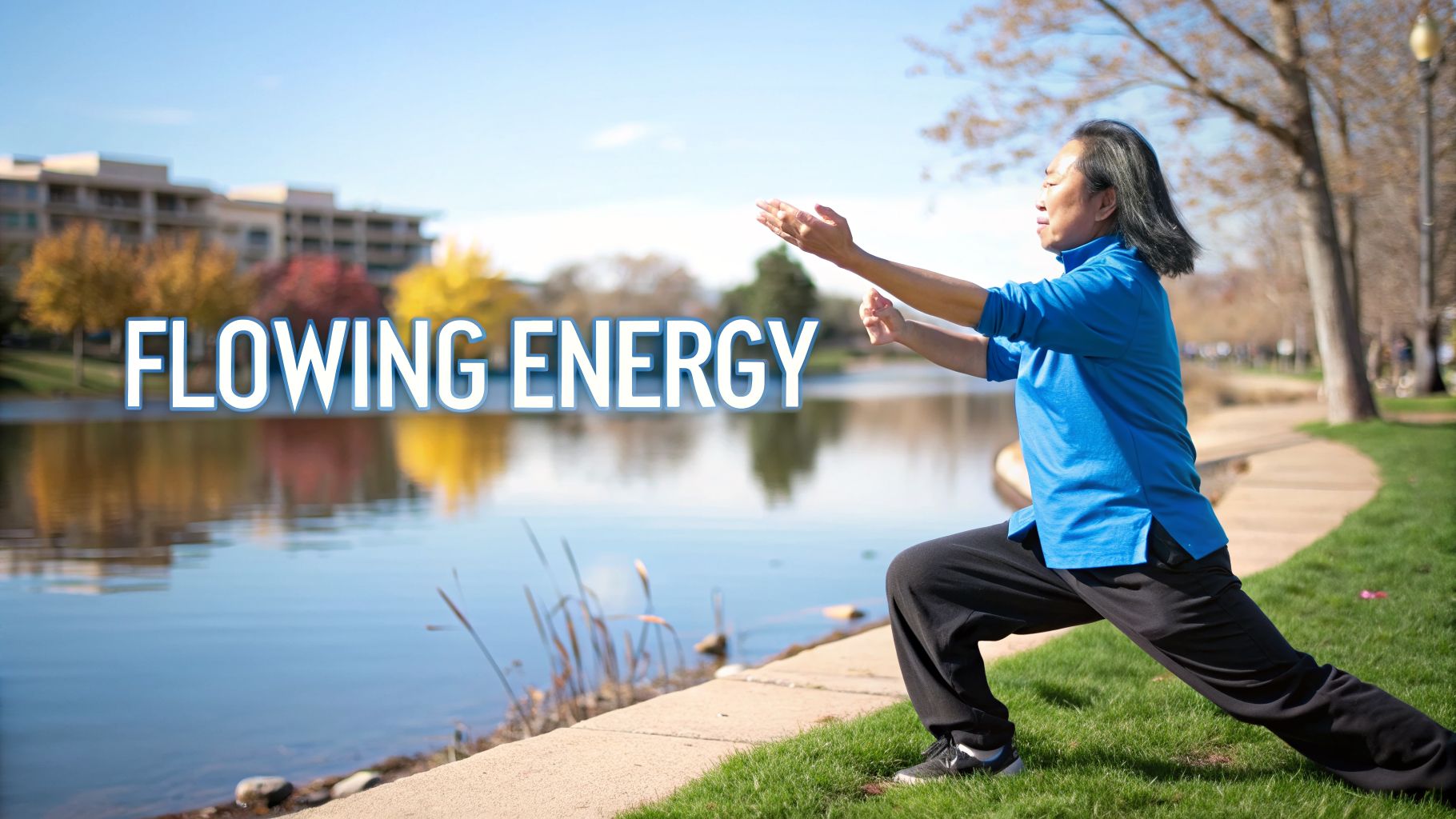
Think of your body’s energy like a river. When you’re healthy and balanced, it flows freely. But stress, unresolved trauma, and the patterns of addiction can act like dams, creating blockages that leave the water stagnant. That stagnation is what we often feel as anxiety, physical pain, and a sense of being stuck.
Qi Gong is an ancient Chinese practice designed to gently clear out that debris and get the river flowing again. The name itself offers the best clue: “Qi” (pronounced “chee”) means vital life force or energy, and “Gong” means work or cultivation. Put them together, and you get “energy work.”
It’s a practice of slow, gentle, and flowing movements combined with deep breathing and a focused mind. The goal isn’t to push your muscles to their limit like in a traditional workout. Instead, the aim is to restore your body’s energetic balance. It's often called a moving meditation, and when qi gong and yoga are combined in a holistic recovery plan at our Euless center, they give you powerful, tangible ways to self-regulate.
The Core of the Practice
At its heart, Qi Gong is built on three simple but powerful elements that work together. Learning to integrate them helps forge a deep connection between your mind and body—a connection that is absolutely vital for sustainable healing.
- Body and Movement: The forms are gentle and specific, designed to release tension and open up the body’s energy pathways. You’re not straining; you’re creating space.
- Breath: The breathing is always slow, deep, and tied directly to your movements. This simple act is one of the fastest ways to calm your nervous system, pulling you out of a constant state of fight-or-flight and into a place of rest and repair.
- Mind and Intention: You train your mind to stay in the present moment, guiding the energy through your body with your focus. This quiet mindfulness helps to silence the noise of anxious thoughts and builds a solid foundation of inner peace.
By weaving these three elements together, Qi Gong gives you a direct way to soothe your mind and ground your body. These are priceless skills to have when navigating the challenges of recovery. To see how we build these skills into our programs, you can read more about our approach to mental health treatment.
The real beauty of Qi Gong lies in how accessible it is. You don't need special equipment or a fancy studio—you can do it anywhere, anytime. It’s a practical tool you can use to navigate cravings, ease anxiety, and find your center, even on the toughest days.
For anyone in Euless or the greater Dallas area, adding Qi Gong to a recovery plan is a way to truly begin healing from the inside out. To learn how we integrate this powerful practice into our programs at Maverick Behavioral Health, call us at (888) 385-2051 today.
Finding Strength and Stillness Through Yoga
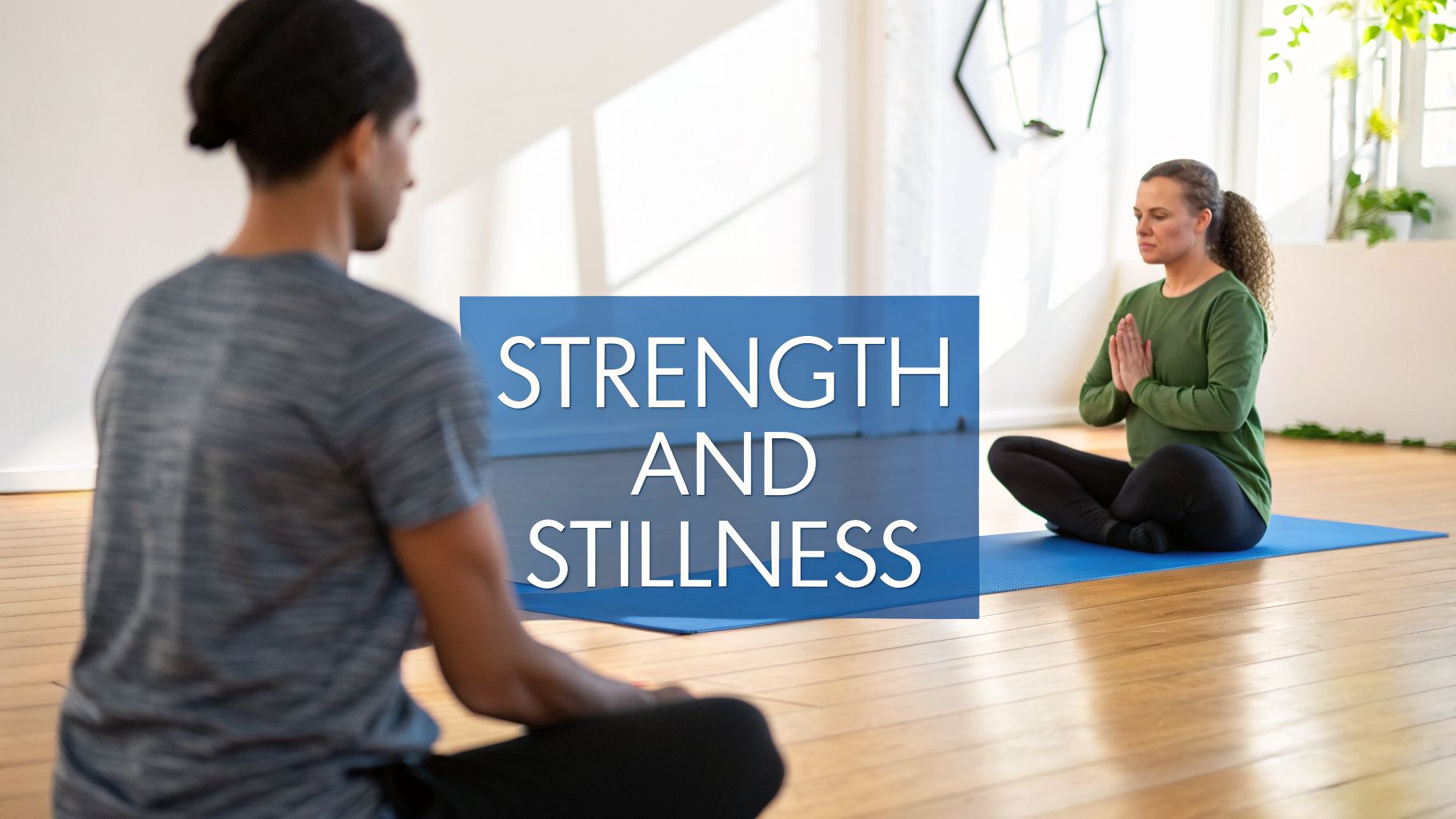
Where Qi Gong focuses on the gentle, flowing cultivation of energy, Yoga provides a powerful path to building both physical strength and deep inner stillness. It’s so much more than just a workout. Yoga is really a form of moving meditation that helps you rebuild the connection to your own body—a relationship that often becomes frayed or broken during struggles with addiction and mental health.
Think of it this way: if recovery is like building a new, resilient house to live in, yoga provides the essential materials and blueprints. Each part of the practice plays a specific, vital role in creating that strong, safe inner structure.
The Architecture of Healing in Yoga
To really get why yoga is so effective in recovery, it helps to see how all its pieces work together. Much like qi gong and yoga both emphasize the mind-body link, the different elements of a yoga practice harmonize to create a stable and peaceful inner environment.
- Asanas (Physical Poses): These are the very foundation of your house. Through poses, you’re not just building strength and flexibility; you’re learning how to stay present with discomfort and breathe through a challenge. This practice builds a strong, stable base for your emotional well-being.
- Pranayama (Breathwork): This is the internal framework holding everything up. By consciously controlling your breath, you can directly influence your nervous system, learning to guide yourself from a state of fight-or-flight anxiety to one of grounded calm.
- Dhyana (Meditation): This is the quiet, safe room inside your new home. Meditation teaches you to observe your thoughts and feelings without judgment, creating an inner sanctuary you can return to whenever you need it.
Releasing the Past and Embracing the Present
The weight of trauma and difficult emotions isn't just mental; it often gets physically "stuck" in the body. This can show up as chronic muscle tension, unexplained pain, or a constant feeling of being on edge. Yoga gives you a direct, physical way to start working through it.
The beauty of yoga is its adaptability. You can always find a style that meets you exactly where you are on any given day.
A gentle, restorative yoga class can soothe an overstimulated nervous system, offering a sense of safety and peace. On another day, a more active, flowing practice can help you release pent-up frustration and restless energy in a healthy, constructive way.
By learning to listen to what your body needs and responding with kindness, you’re developing real-world skills in emotional regulation and self-awareness. These aren't just buzzwords; they are the practical tools you need to navigate the ups and downs of recovery, especially for those in the Dallas and Euless areas.
If you’re ready to start building this strong inner foundation, Maverick Behavioral Health is here to help. We integrate powerful mind-body practices like yoga into our evidence-based treatment programs. Call us at (888) 385-2051 to learn how we can support your journey.
A Shared History of Healing
At first glance, qi gong and yoga might seem like they come from completely different worlds. But think of them as two ancient rivers, originating in different lands, yet both flowing toward the same great ocean of well-being. They share a powerful, core purpose: to work with the body's natural life force to create better health and a more balanced mind. Digging into their shared roots helps explain why they've become such effective, evidence-based tools for modern recovery here in Dallas-Fort Worth.
These practices are so much more than a set of exercises. They're complete, time-tested systems for healing. It all comes down to a concept ancient cultures understood intuitively—that your body has its own internal energy grid. In Chinese medicine and qi gong, this is called "Qi." In the yogic traditions of India, it's known as "Prana." Different names, same fundamental idea: this is the essential energy that fuels your physical health and your mental state.
Parallel Paths to Wellness
For thousands of years, both qi gong and yoga have been refined as methods for managing this internal energy. Imagine tracing their histories back in time, where the very first sages and healers discovered how to combine breath and movement to improve health and live longer, more vibrant lives.
Qi gong’s story begins in China over 4,000 years ago, though some clues suggest its principles are far older. Archaeologists even discovered a nearly 7,000-year-old artifact depicting a figure in poses that look remarkably like early qi gong exercises—movements designed to get life force energy flowing freely. Later, around 300 B.C., foundational medical texts gave structure to these concepts, solidifying a practice that remains a pillar of healing today. You can get a deeper look into the history of these ancient practices and their journey through time.
Yoga’s journey began similarly, with roots in the ancient Vedic traditions of India. Both cultures recognized a simple truth: when your internal energy is blocked or stagnant, it leads to illness, stress, and emotional turmoil. But when that energy flows smoothly and abundantly, the result is vitality, mental clarity, and a deep sense of peace.
From Ancient Wisdom to Modern Healing
What’s truly fascinating is how modern science is now validating this ancient wisdom. We now have the language and tools to understand that the slow, flowing movements of qi gong and the mindful postures of yoga have a direct, measurable effect on our nervous system.
These practices are masters at turning off the body's "fight-or-flight" stress response and turning on the "rest-and-digest" system. This shift is a game-changer for anyone in recovery. It lowers stress hormones like cortisol, quiets an anxious mind, and creates the internal calm needed to navigate cravings and emotional triggers effectively.
This is precisely why you'll find these practices integrated into our leading treatment programs right here in the Euless and Dallas area. They're no longer considered "alternative" therapies but are recognized as vital parts of a comprehensive recovery plan.
Ready to explore how these powerful tools can support your own journey? The team at Maverick Behavioral Health is here to help you get started. Call us at (888) 385-2051 to connect with a compassionate admissions coordinator today.
Start Your Holistic Healing Journey in Dallas-Euless
Making the decision to seek help is a huge step, and you absolutely don't have to figure it out on your own. Think of this as the start of something new—a chapter where healing isn't just about talk therapy, but about reconnecting with your whole self. Here in the Dallas-Fort Worth area, we’ve created a space at Maverick Behavioral Health dedicated to helping you build that stable, healthy life you deserve.
At our center, we've seen incredible results by weaving powerful mind-body practices like qi gong and yoga into our clinical care. True, lasting recovery often happens when proven therapies are supported by practices that help your body and mind find their natural equilibrium. Our team is here to build a recovery plan with you, not for you.
From Ancient Wisdom to Modern Wellness
The long histories of qi gong and yoga aren't just interesting trivia; they show a deep, shared understanding of how breath, movement, and awareness can change a person's life. This tradition is alive and well today, right inside modern recovery centers. For instance, a 2019 review of nine studies with 650 participants showed that Qi Gong programs measurably improved memory and cognitive function—a huge asset for anyone working on their mental wellness. You can dig deeper into how ancient qigong principles support modern health on holdenqigong.com.
Your Local Path to Wellness
Here in Euless and the greater Dallas area, these ancient practices become practical, everyday tools for rebuilding your life. By blending these holistic methods with our outpatient programs, we give you concrete skills to manage stress, handle cravings, and find a real sense of stability.
We don't just treat symptoms; we heal the whole person. Our goal is to help you rebuild a healthier, more fulfilling life by restoring the connection between your mind and body, right here in our Euless treatment center.
This approach gives you a tangible way to take what you learn in therapy and apply it directly to your day-to-day challenges. To get a better feel for how we support our clients right here in the community, you can learn more about our outpatient center in Dallas.
If you’re ready to start this journey and discover a lasting sense of balance, we're here to guide you. Your new beginning is just a conversation away.
Call us at (888) 385-2051 to speak with a compassionate admissions coordinator today. We're ready to help you take the first step.
Frequently Asked Questions About Qi Gong and Yoga
It's completely normal to have questions when you're thinking about adding something new to your recovery plan. Let's walk through some of the most common ones we hear about qi gong and yoga, especially for those looking for practical support in the Dallas and Euless areas.
Do I Need to Be in Good Shape to Start Qi Gong or Yoga?
Not at all. This is probably the biggest myth out there—that you have to be flexible or already fit to even try. The truth is, both of these practices are designed to meet you exactly where you are, regardless of your fitness level, body type, or physical ability.
In our programs at Maverick Behavioral Health, we focus on gentle, restorative movements that are meant for healing, not for a hardcore workout. Our instructors will help you modify every movement so it feels safe, comfortable, and genuinely good for your body. The goal here is connection, not perfection.
How Do These Practices Specifically Help with Cravings?
This is where qi gong and yoga really shine. They work directly on the physical and mental roots of cravings by teaching you powerful breathing and mindfulness skills. Think of it as training your awareness muscle.
Instead of being instantly overwhelmed by a craving, you learn to notice the first whispers of it without having to act.
By using your breath to calm your nervous system, you can effectively reduce the physical intensity of cravings. This creates the mental space needed to pause, ground yourself, and choose a healthier response rather than falling back into old patterns.
Essentially, these practices help you regain a sense of command over your own mind and body. You learn to turn down the volume on the craving so you can think clearly. This is a core skill we teach in our Euless-based programs.
How Often Should I Practice to See Benefits?
Consistency beats intensity every time, especially when you're just starting. You don't need to dedicate hours a day. In fact, just 15-20 minutes of practice a few times a week can make a real, noticeable difference in your stress levels and ability to manage your emotions.
As part of our integrated program at Maverick Behavioral Health, we help you weave a sustainable routine into your life that actively supports your recovery. Making time for this is a powerful form of self-care. And if you're new to the whole process, you might find our guide on how to prepare for your first therapy session helpful for getting into the right headspace.
At Maverick Behavioral Health, we're committed to healing the whole person. If you're ready to see how adding qi gong and yoga to a proven clinical program can support your recovery journey, we’re here to guide you.
Take the first step towards a healthier, more balanced life in the Dallas-Fort Worth area. Call us today at (888) 385-2051 to get started.