



A person finds an open pill bottle on the nightstand. A loved one is harder to wake than usual. Speech is slow, balance is off, and nobody knows whether trazodone was taken alone or with alcohol, pain pills, or another prescription. In that moment, families in Euless, Dallas, and the wider DFW area usually want the same thing. A clear answer to one urgent question: what needs to happen right now?
An overdose on trazodone can range from heavy sedation and vomiting to low blood pressure, seizures, dangerous heart rhythm problems, and serotonin syndrome. Trazodone is often described as lower risk than many other medications when taken by itself, but that doesn’t make a suspected overdose safe to watch at home. Medical evaluation matters because the person in front of you may look sleepy at first and then worsen.
What helps most is a calm sequence. Recognize the signs. Call for help fast. Give responders accurate information. Then treat the overdose as more than a one-day event. In many cases, it’s also a signal that mental health symptoms, substance use, medication confusion, or suicidal thinking need immediate follow-up.
Table of Contents
- A Moment of Crisis Understanding a Trazodone Overdose
- Recognizing the Warning Signs of Trazodone Overdose
- Your Immediate Action Plan for a Trazodone Emergency
- How Much Trazodone Is Dangerous Toxic Dose Ranges
- What Happens at the Hospital Medical Overdose Management
- The Amplified Danger of Polysubstance Use
- The Path Forward Recovery After an Overdose in Dallas
A Moment of Crisis Understanding a Trazodone Overdose
The call often starts the same way. A family member in Dallas finds a loved one hard to wake, sees a trazodone bottle on the nightstand, and is left trying to decide whether this is heavy sleep, a bad reaction, or a medical emergency. In that moment, hesitation is common. So is the dangerous assumption that the person just needs to sleep it off.
That assumption can cost time. Trazodone overdose can affect alertness, blood pressure, heart rhythm, and breathing. The medication is often prescribed for depression or sleep, which can make the scene look less alarming than it is. A person may still be talking, insisting they are fine, or drifting in and out of sleep. None of that rules out a serious overdose.
Reports reviewed in the National Poison Data System analysis of single-substance trazodone exposures show that trazodone overdoses do reach poison centers and can require emergency evaluation, especially when symptoms involve the cardiovascular or central nervous systems. For families, the practical takeaway is simple. If the amount taken is unclear, the prescription was not used as directed, or the person cannot stay awake and answer clearly, treat it like an emergency until clinicians prove otherwise.
Many trazodone overdoses are not tied to recreational drug-seeking. They are often connected to self-harm, severe emotional distress, or a complicated mix of insomnia, depression, alcohol, and other medications. That changes what “help” looks like. The first job is immediate medical stabilization. The next job is addressing why the overdose happened and what support has to be in place before the person goes back home.
For Dallas-area families, the first hour and the next month both matter. The first hour is about getting emergency care without delay. The next month is about building a plan that reduces the chance of another crisis, whether that means psychiatric treatment, substance use care, medication review, or structured follow-up at Maverick Behavioral Health.
Recognizing the Warning Signs of Trazodone Overdose
A trazodone overdose rarely announces itself in one dramatic way. Families usually see a cluster of changes that worsen over minutes to hours. Someone who first seems only very sleepy may become confused, unsteady, short of breath, or difficult to wake.

Central nervous system signs
The earliest sign is often heavy sedation. The person may slur words, lose coordination, stare blankly, or fall asleep in the middle of a conversation. Nausea, vomiting, dizziness, and headache can show up early too. In a more serious overdose, sedation can progress to severe confusion, delirium, seizures, or coma.
Another concern is serotonin toxicity, especially if trazodone was taken with other serotonergic medications such as SSRIs, SNRIs, MAOIs, certain migraine medicines, or some illicit substances. The Merck Manual overview of serotonin syndrome describes a pattern of agitation, tremor, muscle rigidity, fever, diarrhea, and altered mental status. Families do not need to diagnose serotonin syndrome at home. They only need to recognize that new shaking, clonus, muscle stiffness, or sudden mental status changes after an overdose need urgent medical evaluation.
A practical bedside check helps:
- Wakefulness: Can the person stay awake long enough to answer clearly?
- Orientation: Do they know their name, location, and what they took?
- Speech and movement: Are they stumbling, shaking, rigid, or jerking?
- Breathing: Is breathing slow, shallow, noisy, or interrupted?
If those answers are getting worse, the situation is getting worse.
Cardiovascular and other high-risk symptoms
Trazodone can also affect the heart and blood pressure. That is why a person may look “just sleepy” while developing low blood pressure, fainting, or an abnormal heart rhythm. The U.S. National Library of Medicine drug information for trazodone warns patients to seek help for serious symptoms such as irregular heartbeat, fainting, or prolonged erection.
Watch for these higher-risk signs:
- Fainting, collapse, or inability to stand
- A racing, pounding, very slow, or uneven heartbeat
- Shortness of breath or breathing that seems weaker than normal
- Seizures or new jerking movements
- A painful erection lasting more than 4 hours
One clinical mistake families make is assuming sleepiness is the whole story. It is not. The bigger danger may be reduced airway protection, dropping blood pressure, or a rhythm problem that cannot be seen without medical monitoring.
For Dallas families, this is the point to stop debating whether the person is overreacting or just needs to sleep it off. If symptoms are escalating, if other substances may be involved, or if you are unsure what was taken, get emergency help first. After the immediate crisis is addressed, families can contact Maverick Behavioral Health for overdose follow-up and recovery planning so the response does not end at the ER door.
Your Immediate Action Plan for a Trazodone Emergency
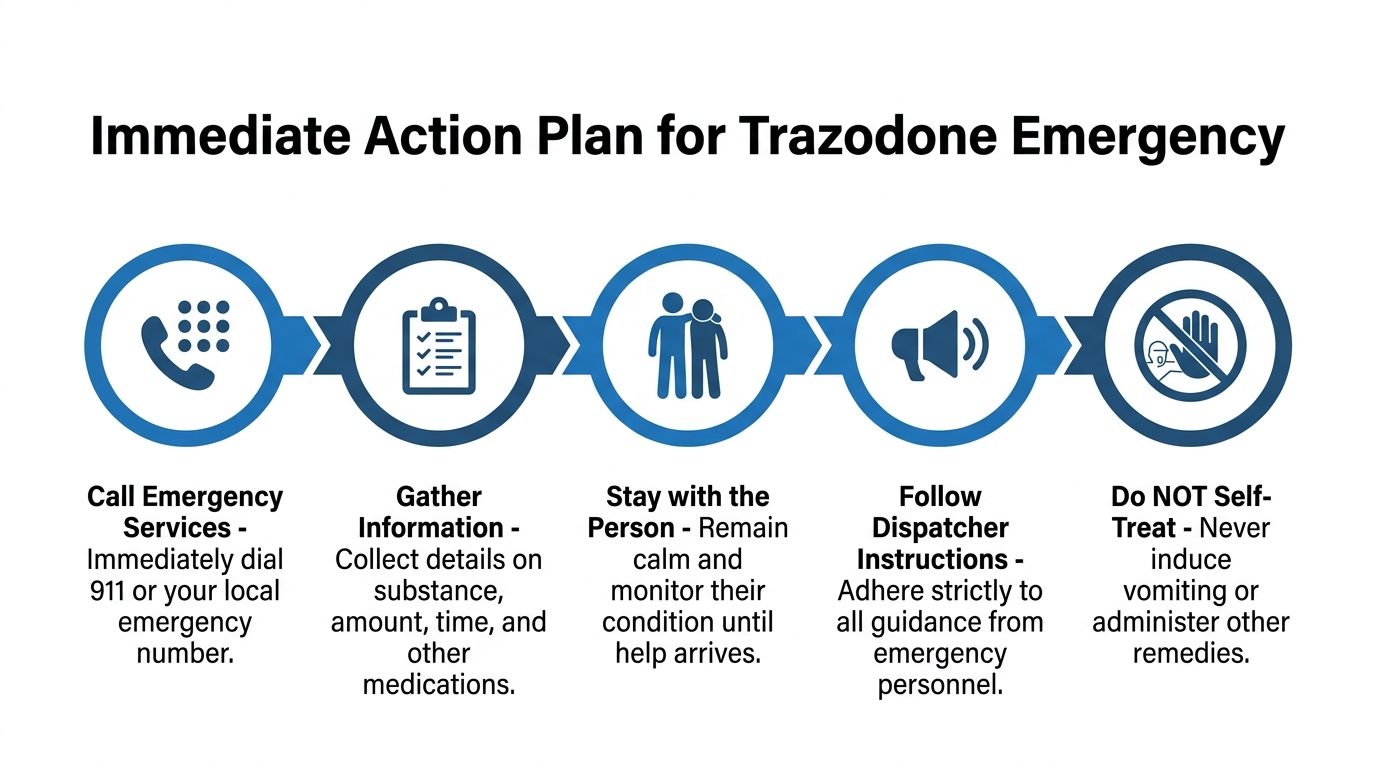
A suspected overdose on trazodone calls for action, not watchful waiting. The most useful response is a short sequence followed in order. Families do better when one person takes the lead, speaks calmly, and starts gathering facts while another stays with the person.
When 911 is the right call
Call 911 immediately if the person is unconscious, hard to wake, having a seizure, struggling to breathe, collapsing, or showing severe confusion. If there’s any doubt about whether the situation is “serious enough,” the safer choice is emergency services.
If the person is awake and stable, Poison Control at 1-800-222-1222 can provide immediate guidance. That doesn’t replace emergency care when severe symptoms are present. It helps in situations where symptoms are still mild and the next step is unclear.
Use this sequence:
- Call emergency help first. Don’t delay the call while trying to calculate the dose perfectly.
- Stay with the person. Don’t leave them alone in a bedroom, bathroom, or car.
- Remove access to more substances. Put away pill bottles, alcohol, or loose tablets.
- Turn them on their side if vomiting or very drowsy. This can reduce choking risk.
- Don’t induce vomiting. Don’t give home remedies, extra medication, or stimulants.
A family trying to decide what to do next can also use Maverick’s contact page after the emergency has passed to arrange follow-up support. In the acute moment, though, medical stabilization comes first.
What to gather before help arrives
Responders can move faster when someone in the home gathers the right details. Perfect accuracy isn’t required. Best available information helps.
Try to have these ready:
- Medication name and strength: Bring the trazodone bottle or packaging.
- Possible amount taken: Estimate how many tablets are missing, if known.
- Time of ingestion: Even a rough window matters.
- Other substances involved: Alcohol, opioids, benzodiazepines, antidepressants, sleep medications, or stimulants can change the risk.
- Age and basic medical history: Especially heart disease, seizure history, or psychiatric diagnoses.
The most useful sentence for dispatch or the ER is often the simplest one: “A trazodone overdose is possible, the person took it around this time, and these other substances may also be involved.”
What doesn’t work is interrogation, blame, or forcing a confession. People who are intoxicated, suicidal, or frightened often minimize what happened. Emergency teams plan for uncertainty. Families should focus on speed, observation, and safe transport.
How Much Trazodone Is Dangerous Toxic Dose Ranges
Families often want a number they can use to decide whether the situation is serious. In practice, trazodone overdose risk does not work that neatly. The same pill count can produce mild sedation in one person and dangerous low blood pressure, abnormal heart rhythm, or severe central nervous system depression in another.
Prescribed trazodone dosing varies by clinical use. Standard references list 150 to 400 mg per day in divided doses for major depressive disorder in outpatients, with up to 600 mg per day used in hospitalized patients under close supervision, according to the FDA prescribing information for trazodone. Those numbers describe monitored medical use. They do not define what will be safe after an impulsive ingestion, a suicide attempt, or a mixed-substance episode.
Once the amount taken rises well above a prescribed daily dose, the chance of serious toxicity increases. Reported overdoses have involved profound drowsiness, vomiting, low blood pressure, seizures, and cardiac conduction problems. The risk climbs further when trazodone is taken with alcohol, opioids, benzodiazepines, sleep medications, or other antidepressants. For families in Dallas trying to make a quick decision at home, the practical takeaway is simple. A clearly excessive ingestion should be treated as an emergency even if the person is still awake and talking.
Trazodone dosage and overdose risk levels
| Dosage Level | Typical Amount (mg) | Associated Risk |
|---|---|---|
| Lower outpatient therapeutic range | Varies by prescription | Expected use under routine outpatient care |
| Common depression treatment range | Up to 400 mg/day | Therapeutic use with physician oversight |
| Hospitalized patient maximum reported range | Up to 600 mg/day | Higher supervised dosing in inpatient settings |
| Above prescribed or unknown excess amount | Varies | Toxic effects become more likely, especially with symptoms or co-ingestants |
| Large intentional or accidental overdose | Varies | Medical emergency with risk of cardiovascular and neurologic complications |
A table like this helps families see how quickly "a few extra pills" can become an ER problem. It should not be used for home dose calculations or reassurance.
There is another real-world problem. Families are often working with incomplete information. Pills may be missing, the bottle may be old, and the person may deny taking anything else. That uncertainty is common in overdose care, and it is one reason clinicians recommend responding to the situation, not trying to prove the exact milligram count before calling for help.
The safest rule is straightforward. If the amount is unknown, the ingestion appears larger than prescribed, substances may have been mixed, or symptoms have started, get emergency evaluation right away.
What Happens at the Hospital Medical Overdose Management
By the time a family reaches the emergency room, the question usually changes from “Was it enough to be dangerous?” to “What are they doing right now, and what happens next?” In the hospital, the job is straightforward. Keep the person safe, watch for complications that can develop over several hours, and treat the problems that appear.
What emergency clinicians focus on first
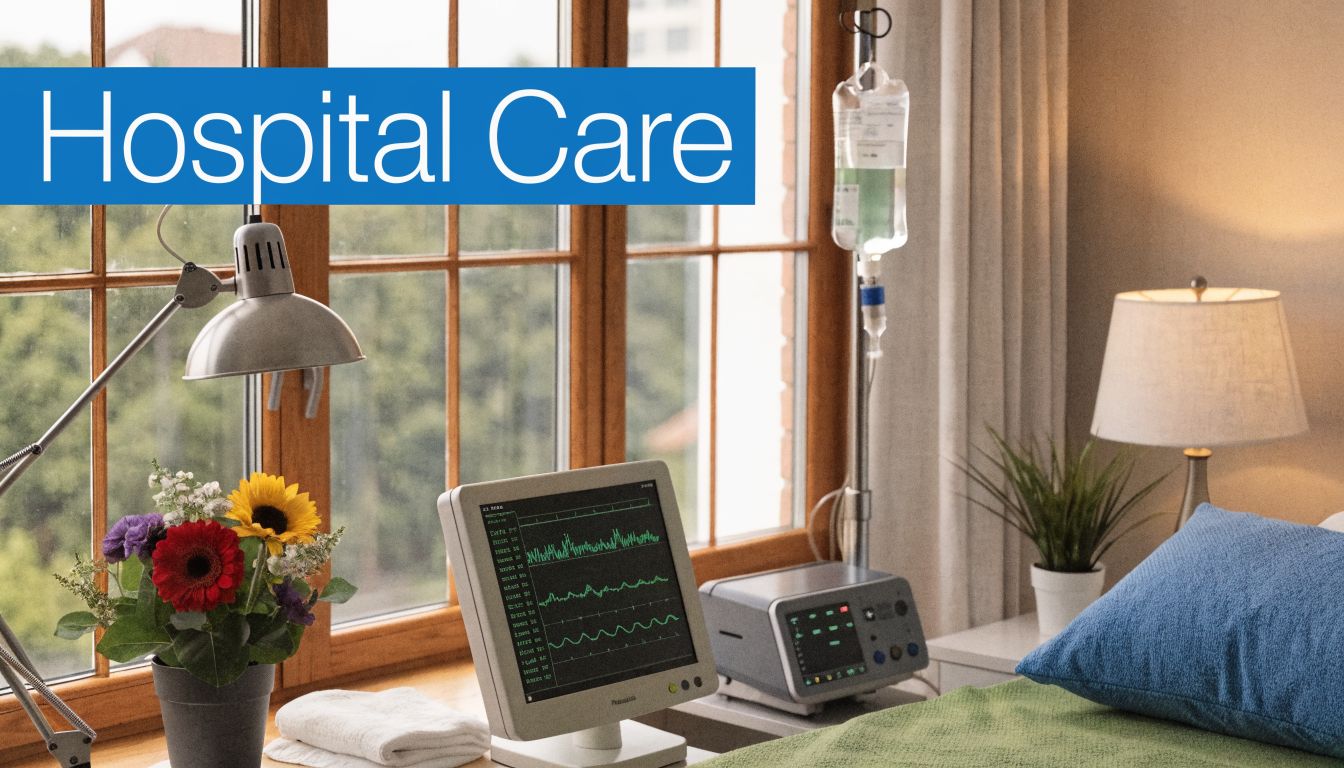
The first assessment is immediate and practical. Clinicians check airway, breathing, circulation, heart rhythm, blood pressure, temperature, and level of consciousness. A patient who is very sedated may need breathing support. A patient with low blood pressure may need IV fluids, repeated reassessment, and sometimes care in a higher-acuity unit. Seizures, agitation, or dangerous rhythm changes are treated as they occur.
Trazodone overdose does not have a single antidote. Care is largely supportive, which means the medical team stabilizes the body while the drug is metabolized and monitors closely for cardiac and neurologic complications.
Common hospital actions include:
- Continuous cardiac and oxygen monitoring: Staff track heart rhythm, oxygen level, pulse, and blood pressure in real time.
- IV access and fluids: This supports circulation and allows quick delivery of medications if the patient worsens.
- EKG testing: Clinicians look for conduction changes or arrhythmia risk that may not be obvious from symptoms alone.
- Laboratory testing: Teams check electrolytes, glucose, kidney function, and other findings that can change treatment decisions.
- Observation or ICU transfer: Reduced consciousness, persistent hypotension, seizures, or significant EKG abnormalities can require a higher level of care.
Why the hospital may look quiet even during serious care
Families often expect dramatic treatment if the overdose is serious. In many trazodone cases, the most important treatment is close observation with repeated reassessment.
That matters because a person can look sleepy, answer a few questions, and still be medically unstable. As noted in peer-reviewed clinical discussion of trazodone toxicity and management, overdose can involve central nervous system depression, hypotension, QT prolongation, and other complications that require monitoring rather than a one-time intervention.
Older decontamination measures such as activated charcoal may be considered in selected cases if the timing and clinical situation fit. The decision is made by the emergency team, based on factors like alertness, aspiration risk, and how long ago the ingestion happened. Home treatment is never the place for that decision.
For Dallas families, there is another piece of the hospital visit that matters. Once the person is medically stable, the conversation often shifts to why the overdose happened in the first place. If depression, anxiety, substance use, or more than one condition is involved, follow-up care should address all of it together. A dual diagnosis rehab program in Dallas can help connect the overdose event to a realistic treatment plan instead of sending the family home with unanswered questions.
The hospital handles the emergency. Recovery work starts after the monitors come off.
The Amplified Danger of Polysubstance Use
A trazodone overdose rarely stays simple once other substances are involved. In the ER, the question is often not just how much trazodone was taken. It is what else was on board, when it was taken, and whether the combination is now affecting breathing, heart rhythm, temperature, or mental status.
Why mixed substances change the risk
Alcohol, benzodiazepines, opioids, and other sedating drugs can intensify the effects families already fear with trazodone overdose. A person may become harder to wake, vomit without protecting their airway, breathe too slowly, or lose consciousness. That combination also makes the clinical picture less predictable. A dose that might have caused heavy sedation on its own can become much more dangerous when another depressant is added.
A different kind of emergency can develop when trazodone is combined with other serotonin-raising drugs, including certain antidepressants, stimulants, migraine medicines, and some illicit substances. Serotonin syndrome can cause agitation, tremor, diarrhea, sweating, muscle rigidity, fever, confusion, and in severe cases, seizures or dangerously high body temperature. The U.S. National Library of Medicine overview of serotonin syndrome describes this condition as a medication-related emergency that becomes more likely when serotonergic substances are combined.
This overlap matters after discharge too. Patients who are mixing prescribed medication with alcohol, street drugs, or extra pills taken during a mental health crisis usually need treatment for both problems at the same time. A dual diagnosis rehab program in Dallas can help families address the depression, insomnia, anxiety, substance use, and medication confusion that often sit underneath the overdose.
Who needs extra caution
Children, teens, older adults, and anyone with underlying heart disease, seizure risk, or multiple prescriptions deserve especially fast evaluation. So does anyone who may have taken a long-acting medication, an unknown pill, or a mix of substances that no one can fully identify.
In mixed-substance cases, a few practical steps make a real difference:
- Tell the ER team about every possible substance. Include alcohol, THC products, pain pills, anxiety medication, sleep aids, stimulants, and anything bought online or borrowed from someone else.
- Bring what you can. Pill bottles, loose tablets, medication lists, pharmacy printouts, and photos of labels help clinicians make safer decisions faster.
- Do not let shame edit the story. Families often leave out alcohol or drug use because they want to protect the person. That can delay the right treatment.
When the story is incomplete, emergency clinicians assume the overdose may involve more than one substance. Families should do the same.
For Dallas families, this is the practical takeaway. Treat any suspected trazodone overdose with possible co-ingestion as a higher-risk event, even if the person is still talking or says they are fine. Full disclosure helps the medical team choose monitoring, testing, and supportive care that match the danger in front of them.
The Path Forward Recovery After an Overdose in Dallas
At 2 a.m., the hospital may feel like the finish line. By the next morning, families in Dallas often realize it was the start of a different problem. The overdose was treated. The reasons behind it still need attention.
A trazodone overdose should trigger a careful follow-up plan, especially if there was suicidal thinking, alcohol or drug use, missed psychiatric care, or confusion about how the medication was being taken. The National Institute of Mental Health notes that a suicide attempt is one of the strongest known risk factors for future suicide, which is why discharge after an overdose needs to lead to prompt mental health assessment and safety planning, not simple reassurance. See the NIMH guidance on warning signs, risk, and immediate response to suicidal crisis.
Why families need a plan for the next 72 hours
The highest-stress part often comes after the monitors come off and everyone goes home.
Some patients feel ashamed and withdraw. Some minimize what happened. Some families want to believe the danger has passed because they are exhausted and relieved. In practice, that is when structure matters most. Someone needs to know who is prescribing medications, who is checking on the patient, where follow-up will happen, and how access to pills will be limited at home.
A useful first plan usually answers four questions:
- Was the overdose related to suicidal intent, panic, anger, hopelessness, or confusion?
- Is there an untreated mental health condition that needs prompt care?
- Did alcohol or other drugs contribute to the event?
- What level of support is realistic over the next few days and weeks?
What practical recovery planning looks like in Dallas
Good recovery planning is specific. It should match the actual risks in front of the family, not the version everyone wishes were true.
That often includes:
- A medication review: The prescriber should decide whether trazodone still makes sense, whether another medication is safer, and who will control dispensing.
- Home safety changes: Lock up medications, reduce excess pill supply, and assign one adult to manage refills.
- A mental health evaluation: Depression, trauma, grief, anxiety, insomnia, and suicidal thinking all need direct treatment after an overdose.
- A substance use assessment: If alcohol, benzodiazepines, opioids, stimulants, or cannabis were part of the picture, treatment should address that openly.
- The right level of care: Some adults can do well in outpatient therapy. Others need PHP, IOP, or a dual-diagnosis program with closer oversight.
For people who need help addressing prescription medication misuse along with the mental health issues around it, prescription medication rehab in Dallas County may be an appropriate next step.
Turning an overdose into treatment, not just relief
Families often ask a practical question: what now?
The answer is usually not one appointment and a promise to be careful. It is a connected plan that links the ER visit to psychiatric care, substance use treatment when needed, safer medication management, and family involvement that supports recovery without turning the home into a surveillance unit.
In the Dallas area, that means setting up care quickly while the event is still being taken seriously by everyone involved. Delays create room for avoidance, missed appointments, and another crisis.
An overdose can become the moment a family stops guessing and starts getting treatment that fits the whole picture. Maverick Behavioral Health provides outpatient substance use and mental health treatment for adults in Dallas, Euless, and the surrounding DFW area who need real follow-up after a crisis. To speak with a team member confidentially, call (888) 385-2051.