



Suboxone usually stays in the body for about 5 to 10 days after the last dose because buprenorphine has an elimination half-life of about 24 to 42 hours. In urine, it may be detectable for a week or more, and in some cases metabolites can be found for up to 14 days, while hair testing can detect substance exposure for much longer depending on the test used.
For many people, that answer comes up during a stressful moment. A job screen is scheduled. A family member is asking questions. A person who's trying to do the right thing in recovery wants to know whether taking prescribed treatment will create a new problem. The good news is that, with proper medical guidance, this is a manageable part of treatment.
People across Euless, Dallas, and the wider DFW area often search “how long does suboxone stay in your system” because they want one exact number. Real life usually doesn't work that way. Detection depends on the test, the body, the dose, and whether a lab is looking for buprenorphine itself or its metabolites. What matters most is understanding the difference between being in treatment and misusing opioids. Those are not the same thing, and they shouldn't be treated as the same thing.
Table of Contents
- Searching for Answers on Suboxone Detection
- How Your Body Processes Suboxone
- Suboxone Detection Windows by Test Type
- Factors That Change Your Suboxone Detection Time
- Navigating Drug Tests for Work in Texas
- How We Use Suboxone in Treatment at Maverick Behavioral Health
- Common Questions About Suboxone Use and Testing
Searching for Answers on Suboxone Detection
A common scenario looks like this. Someone is taking Suboxone as prescribed, trying to stabilize, trying to keep work and family life together, and then a drug screen gets mentioned. The panic starts fast because the search results rarely explain the difference between detection and wrongdoing.
That distinction matters.
Suboxone is a legitimate medication used in opioid treatment. The fact that it can stay detectable for days after a last dose doesn't mean treatment is failing, and it doesn't mean a person has done anything improper. It means the medication was designed to last and provide steadier support than short-acting opioids.
Why this question feels so urgent
People searching this topic aren't curious in an abstract way. They want to know one of three things:
- Work concerns: Will a pre-employment or workplace screen create trouble?
- Treatment concerns: How long will the medication still affect the body after a dose change or missed dose?
- Family concerns: Is it normal for this medication to stay around longer than people expect?
Practical rule: A longer detection window isn't automatically bad news. In treatment, it often reflects the same long-acting properties that help reduce cravings and support stability.
In the Dallas-Fort Worth area, many people in outpatient care need to balance recovery with real-world responsibilities. They're commuting, parenting, working, or trying to return to school. They need clear information, not judgment. They also need to know that medication-assisted treatment can be handled openly and appropriately within a medical setting.
What this answer should really provide
The useful answer isn't just a list of test windows. It's a framework for making good decisions. If someone is prescribed Suboxone, the right next step isn't trying to hide treatment. The better step is learning how detection works, keeping documentation organized, and following the treatment plan carefully.
That shift in mindset lowers a lot of fear. Recovery works better when people stop treating prescribed care like a secret.
How Your Body Processes Suboxone
A common outpatient scenario in Dallas-Fort Worth looks like this. Someone is taking Suboxone as prescribed, feels more stable, and then starts worrying because the medication does not seem to leave the body quickly. That slower clearance is usually part of why the treatment works.
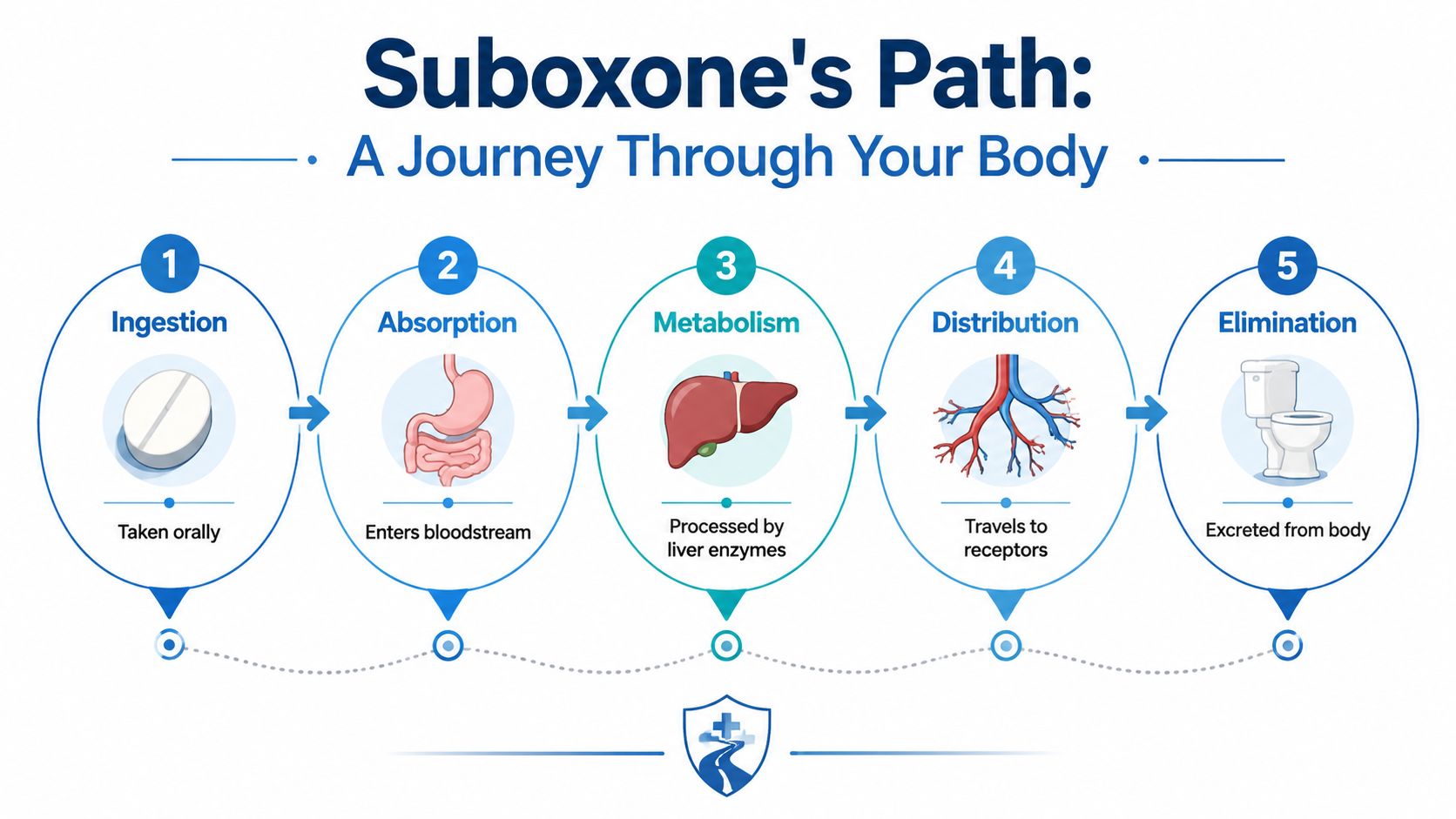
Suboxone contains buprenorphine, and buprenorphine is the main reason the medication remains detectable longer than short-acting opioids. After a dose is absorbed, the liver breaks it down over time and the body clears it gradually. In practice, that slower process helps maintain steadier medication levels instead of sharp rises and crashes that can pull attention back to withdrawal or cravings.
Why buprenorphine matters most
Clinicians discussing Suboxone detection times usually focus on buprenorphine. It drives the main treatment effect and usually sets the pace for how long the medication can remain in the system. Published pharmacology data describes buprenorphine as having a long and variable terminal elimination half-life, which helps explain why one person may still test positive after another would not under similar circumstances, according to published buprenorphine pharmacology data.
That long half-life has real trade-offs. The benefit is steadier symptom control between doses, which is one reason many patients in outpatient care can work, drive, parent, and keep appointments without the constant cycle of intoxication and withdrawal. The trade-off is simple. A medication designed to last will not disappear overnight.
If you want more context on how this fits into treatment rather than just testing, this overview of medication-assisted treatment for opioid addiction explains why longer-acting medications are often useful in recovery.
What half-life means in plain language
A half-life is the time it takes for the amount of a drug in the body to drop by about half. The body clears medication in stages, not all at once.
For patients and families, the practical takeaway is that Suboxone can keep affecting the body for days after a dose, even as the level gradually falls. That is normal. It also explains why trying to name one exact cutoff for every patient usually creates more anxiety than clarity.
In a treatment setting, we do not read a longer detection window as proof that something is wrong. We read it in context. Dose, liver function, metabolism, other medications, and consistency of use all affect how quickly buprenorphine is processed. That is one reason medically supervised treatment is more reliable than guesswork, especially for people balancing recovery with work requirements in Texas.
The same long-acting property that helps Suboxone support recovery is also the reason it may remain detectable longer than people expect.
For many patients, that is reassuring once they understand it. Prescribed MAT is a managed medical treatment, not something shameful or secretive.
Suboxone Detection Windows by Test Type
When people ask how long does suboxone stay in your system, they're often really asking about urine testing. That makes sense because urine is the test frequently encountered in treatment, employment settings, or medical follow-up. Still, different test types look at the body in different ways, and that changes the detection window.
A quick reference table
The most reliable numeric guidance available here supports the following practical summary.
| Test Type | Typical Detection Window |
|---|---|
| Urine | Up to 14 days for metabolites in some cases |
| Blood | Varies, generally shorter than urine |
| Saliva | Varies, generally shorter than urine |
| Hair | Can reflect much longer history depending on the test used |
This topic often comes up alongside questions about other substances and screening windows, so some readers also find it useful to compare detection concepts in this article about how long kratom stays in urine.
Why urine gets most of the attention
Urine testing matters because it may detect both buprenorphine and its metabolite norbuprenorphine. According to clinical guidance on Suboxone elimination and detection, buprenorphine has an elimination half-life of about 24 to 42 hours, can take about 5 to 10 days to be eliminated after the last dose, and metabolites like norbuprenorphine can be found in urine for up to 14 days.
That's a wide enough range to create anxiety, especially if someone expects the medication to be gone in just a day or two. It also explains why a person may still have a detectable urine result even though they don't feel the dose in an obvious way.
Blood, saliva, and hair testing
Blood and saliva are usually discussed as shorter-window options, but the exact result still depends on the laboratory method, the timing of the sample, and whether the test is broad or specifically targeted to buprenorphine. For most patients, those tests are less common in everyday life than urine.
Hair is different. It doesn't measure current impairment. It reflects a longer record because substances can become incorporated into hair as it grows. That's why hair testing raises a separate issue from urine testing. It's less about what's active in the body right now and more about whether there has been prior exposure over time.
- Urine tests: Often the most relevant for treatment and workplace concerns.
- Blood tests: More useful when a medical setting needs a narrower time frame.
- Saliva tests: Less invasive, but still dependent on the specific panel used.
- Hair tests: Better understood as a history-based screen, not a measure of current functioning.
A key practical point is that not every screen automatically tests for buprenorphine. Some panels are general. Others are targeted. That lab detail matters more than many people realize.
Factors That Change Your Suboxone Detection Time
The ranges above are only ranges because bodies don't process medication identically. Two people can take the same medication and still clear it at different speeds. That isn't unusual. It's part of everyday clinical reality.
The biggest variables
Some factors are straightforward, and others are easy to overlook.
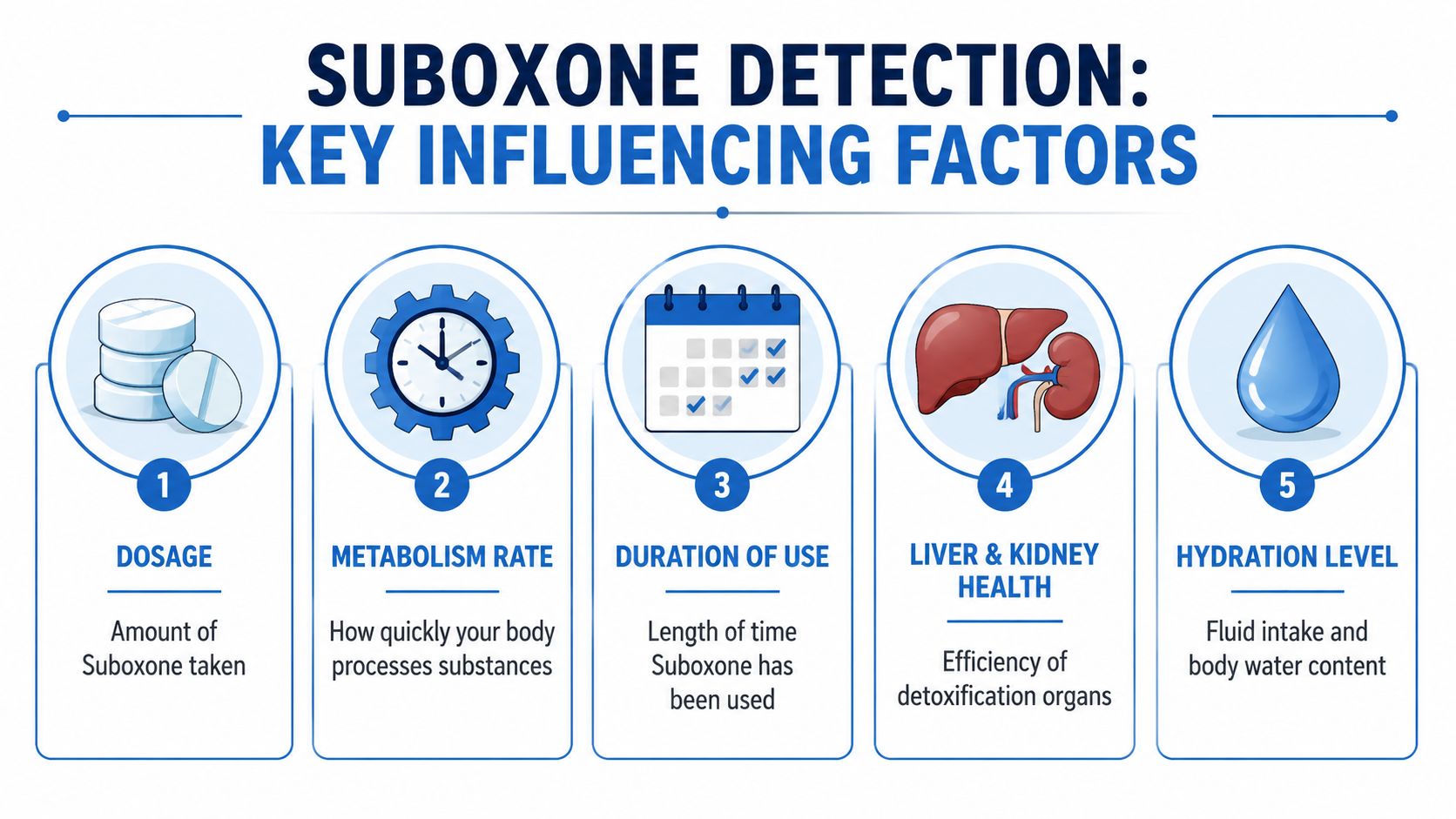
- Dose size: Larger doses may take longer to clear than smaller ones.
- Length of use: Ongoing use can create a different pattern than brief use.
- Metabolism: Some people process medications faster, others more slowly.
- Liver function: Since the liver helps process buprenorphine, liver health can materially change timing.
- Other medications: Some medications can affect the enzyme activity involved in metabolism.
Age, body composition, hydration, and overall health can also influence the timeline. None of these factors gives a person a precise home calculation. They explain why a broad estimate works better than a one-day promise.
What doesn't work
People under stress often look for ways to “flush” Suboxone out quickly. That approach usually causes more confusion than benefit. Drinking large amounts of water, over-exercising, or trying home detox tricks doesn't change the basic fact that the body clears buprenorphine over time through normal metabolism.
Trying to outsmart a detection window usually backfires. Medical planning works better than panic-based shortcuts.
A safer approach is practical and boring. Take the medication exactly as prescribed. Don't change the dose without medical guidance. Keep records of the prescription. If a test is coming, ask the prescribing team what documentation should be ready.
That advice may not feel dramatic, but it's what works.
Navigating Drug Tests for Work in Texas
For many adults in Texas, the hardest part of this topic isn't pharmacology. It's fear. They're worried that a prescribed medication for opioid use disorder will be treated the same way as illicit opioid use, and they're worried one lab report could jeopardize a job.
That fear is understandable. It's also important to slow the situation down and handle it correctly.

Prescription treatment and workplace screening
A legally prescribed medication used as directed is not the same thing as unauthorized drug use. In many workplace testing situations, the critical issue is verification. If a screening process includes medical review, the person may be asked to provide prescription information so the result can be interpreted in context.
That's one reason secrecy can create more stress than honesty. A person who's in legitimate treatment is usually in a stronger position when documentation is accurate, current, and easy to provide if requested.
A practical way to handle the process
When employment testing is involved, a calm process helps.
- Read the policy carefully: Some employers use general panels, while others use more targeted screening.
- Keep prescription details available: The label, pharmacy information, and prescriber information should be easy to access.
- Respond promptly if contacted: If a Medical Review Officer or testing administrator requests verification, delays only make things harder.
- Avoid volunteering unnecessary medical detail to everyone: Share the needed information through the proper review channel, not casually with coworkers or supervisors unless required.
- Talk with the treatment team ahead of time: Planning before the test is far better than scrambling after the result.
A verified prescription usually changes the conversation from “unauthorized use” to “documented medical treatment.”
Texas workers often need a practical answer, not a theoretical one. The practical answer is this: if someone is taking prescribed Suboxone, the smartest move is to prepare for verification, not to assume the situation is hopeless. Many people in outpatient recovery continue working successfully while receiving medication-assisted care.
How We Use Suboxone in Treatment at Maverick Behavioral Health
Suboxone makes the most sense when it's treated as one part of a larger recovery plan. Medication can reduce cravings and help stabilize the body, but recovery also needs structure, accountability, therapy, and a plan for day-to-day life. That's especially true in outpatient care, where people are rebuilding routines while still living in their daily lives.

Suboxone as one part of outpatient recovery
In a structured outpatient setting, Suboxone isn't framed as something to hide. It's used as a clinical tool to support recovery while the person works on behavior change, emotional regulation, relapse prevention, and family stability. That's the value of a coordinated medication-assisted treatment program. It gives the medication a purpose inside a full treatment plan rather than leaving the person to manage everything alone.
For people whose work includes regulated testing requirements, practical education matters too. A resource like this guide to federal drug testing compliance can help readers understand how formal testing frameworks are often handled and why documentation and review procedures matter.
Why supervision matters
A medically supervised plan helps answer the questions that internet searches can't settle. Is the current dose working well? Is the person feeling stable? Are side effects, liver concerns, or schedule demands affecting treatment? Is a job-related screen likely to require extra documentation?
Those questions are where professional care changes the experience. Instead of guessing, the patient has a team helping coordinate medication, therapy, and practical problem-solving.
That reduces chaos. It also reduces shame.
People in Euless and across the Dallas area often need treatment that fits around work, school, court obligations, or parenting. A strong outpatient plan respects those realities. It treats Suboxone as a legitimate medical intervention and builds the rest of recovery around consistency, honesty, and support.
Common Questions About Suboxone Use and Testing
A few concerns come up again and again, especially from patients early in treatment and from family members trying to understand how this medication works.
Can someone speed up elimination
Usually, no in any meaningful way. The body clears buprenorphine through its normal metabolic processes. Hydration, rest, and good nutrition support general health, but they don't create a shortcut that overrides pharmacology.
What helps most is simple. Follow the prescription. Don't add unapproved substances. Don't stop suddenly without medical guidance.
What if a dose is missed
A missed dose doesn't always create an emergency, but it should never become a guessing game. Some people notice symptoms sooner than others. Some mainly notice increased anxiety because they're worried about withdrawal or cravings returning.
The safest move is to contact the prescribing clinician or treatment team and ask for instructions specific to the current plan. Taking extra medication without guidance or trying to “catch up” impulsively can create new problems.
Will a valid prescription still mean a failed test
Not necessarily. The answer depends on the test, the employer's process, and whether there is a medical review step that allows prescription verification. The important point is that prescribed treatment and illicit opioid misuse are not the same thing.
- Bring documentation: Keep pharmacy and prescriber details current.
- Use the proper review channel: If verification is requested, respond through the official process.
- Don't assume the worst: A detected medication can often be medically explained when it is prescribed and taken appropriately.
People do best when they treat a drug test like an administrative process, not a moral judgment.
Questions about Suboxone, work, family concerns, and outpatient treatment don't always fit neatly into a search bar. The right guidance can make the difference between panic and a workable plan.
If a person in Euless, Dallas, or the surrounding DFW area needs clear answers about Suboxone, drug testing, or outpatient opioid treatment, Maverick Behavioral Health can help. Compassionate, evidence-based support is available for individuals and families who want a practical treatment plan that works in real life. To talk through options confidentially, call (888) 385-2051.