


A person searching for addicare in garland tx usually isn't browsing out of casual curiosity. It’s often late, emotions are running hot, and the search is happening after a broken promise, a scare at work, a family argument, or a moment when it becomes impossible to pretend things are still manageable. The hardest part isn’t only finding treatment. It’s figuring out which place fits the person who needs help.
That confusion is real. One center says outpatient. Another mentions counseling. Another lists specialty programs, but leaves out the details that matter when someone needs to make a decision today. Families want straight answers about services, intake, scheduling, and payment. They also want to know whether a program is practical enough to stick with once real life kicks back in.
This guide gives that clarity. It covers what Addicare offers in Garland, what the intake process appears to involve, where the biggest friction point may be, and how to judge whether any outpatient program in Dallas is the right match. For readers also considering care in the wider DFW area, this Dallas addiction treatment center resource may help with local options and next steps.
Table of Contents
- Finding Hope and Help in Garland TX
- What is Addicare An Overview of Services
- Understanding Addicare's Treatment Programs
- The Patient Experience Intake Evaluation and Cost
- How to Choose the Right Outpatient Treatment Center in Dallas
- Take the Next Step Toward Recovery Today
Finding Hope and Help in Garland TX
A lot of people in Garland start in the same place. They know something has to change, but they don't yet know what level of care makes sense, what services are effective, or how to sort real treatment from vague marketing. That uncertainty can keep people stuck for far too long.
For one family, the issue may be alcohol and escalating conflict at home. For another, it may be opioid use, missed shifts, and growing fear about withdrawal. Someone else may be trying to find help for a teenager who’s already had school problems, legal stress, or intense anger that keeps spilling into every relationship. The common thread is urgency. The need is immediate, even when the paperwork and phone calls make it feel slow.
Practical rule: The best program isn't the one with the nicest description. It's the one the person can start, afford, attend consistently, and stay engaged in long enough to build momentum.
That’s why a simple directory listing isn’t enough. People need to know what outpatient treatment looks like, who a program is designed for, and what hidden issues could create problems after admission. A center may sound good on paper but still be a poor fit if the schedule clashes with work, the treatment model doesn’t address mental health, or payment questions stay murky until the last minute.
Families in Garland, Dallas, and nearby communities need a practical filter. First, understand the basics of the center being considered. Then look harder at the parts that often get skipped, especially intake, insurance, and whether the care model matches the person’s daily reality. That approach saves time and usually leads to a better decision.
What is Addicare An Overview of Services
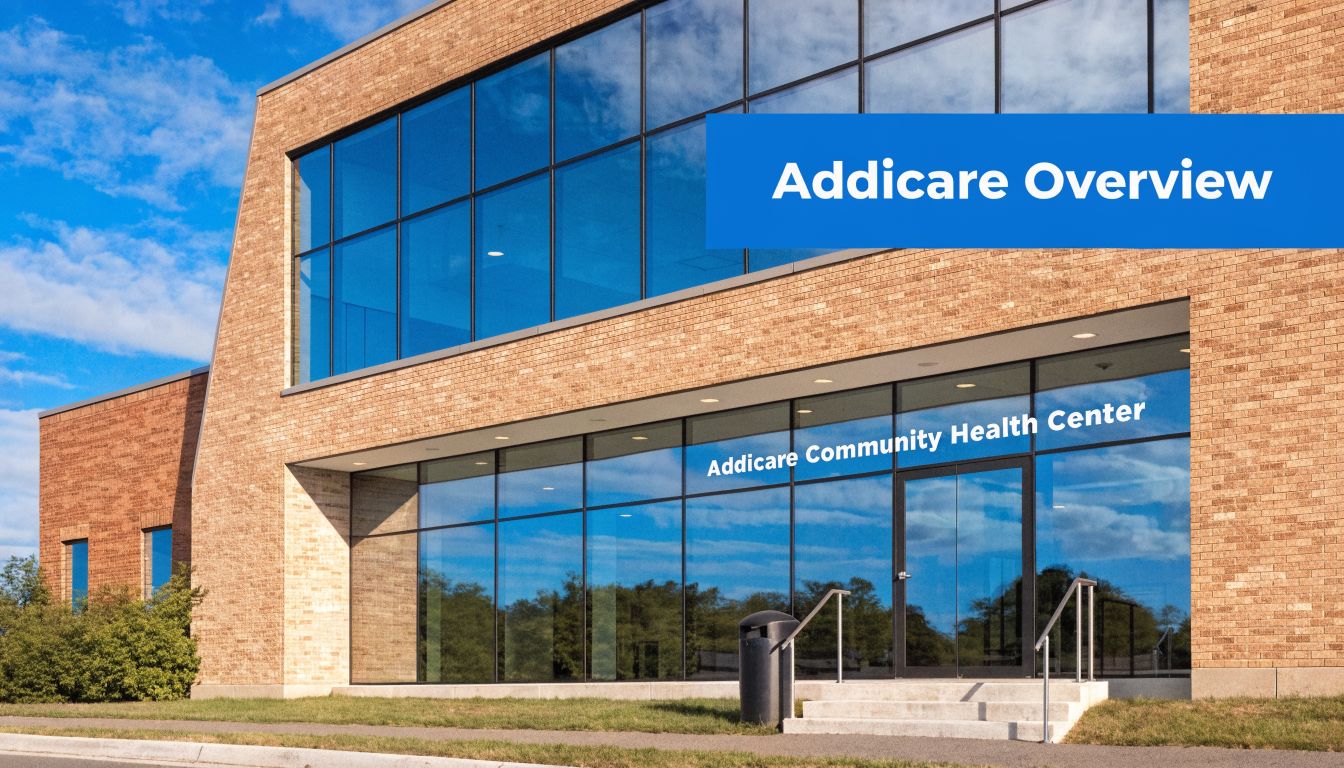
Addicare Group of Texas is located at 2722 West Kingsley Street, Suite 115, Garland, TX 75041. Publicly available information describes it as a private non-profit outpatient treatment center serving adolescents and adults with substance use disorders, and notes that it holds State Department of Health accreditations and has a Recovered TrustScore of 3.85 out of 5 according to this Addicare Garland profile.
Who Addicare appears to serve
The public description points to a broad outpatient audience. That includes adolescents, emerging adults, and adults dealing with substance use involving alcohol, opioids, cocaine, meth, and prescription drugs. It also indicates support for co-occurring concerns such as anger management and domestic violence issues.
That matters because outpatient treatment works best when the program can address more than the substance alone. A person may arrive because of drinking or drug use, but the actual day-to-day problems often include unstable emotions, damaged family relationships, legal pressure, or a pattern of conflict that keeps recovery fragile.
What stands out in the service mix
Addicare appears to focus on structured outpatient care rather than residential treatment. The service mix listed publicly includes:
- Counseling approaches: cognitive behavioral therapy, motivational interviewing, relapse prevention, and individual, group, and family counseling.
- Special populations: DUI and DWI clients, teens, young adults, and adults up to age 64.
- Scheduling flexibility: morning, afternoon, and evening availability for people balancing work, school, or family demands.
- Language access: Spanish-language services are emphasized in the public-facing material.
A center can be clinically sound and still not be the right fit. The key question is whether its strengths line up with the person’s actual barriers, not just their diagnosis.
There’s also a practical takeaway here for anyone searching addicare in garland tx. Addicare appears built for people who need treatment while continuing to live at home and maintain outside responsibilities. That can be a strong option for someone who has enough stability to participate consistently in outpatient care and doesn’t require a higher level of supervision.
For families comparing programs in the Dallas area, this baseline matters. Addicare is not just a name in a directory. It appears to be a nonprofit outpatient provider with a broad community-facing mission, structured counseling options, and a service model aimed at accessibility.
Understanding Addicare's Treatment Programs
The clinical details matter more than the label on the website. “Outpatient” can mean very different things depending on how treatment is structured, what therapies are used, and whether the program removes enough friction for someone to stay engaged when cravings, stress, or family conflict spike.

Counseling and group-based structure
Public information indicates that Addicare offers individual, group, and family counseling, along with cognitive behavioral therapy and motivational interviewing. That’s a practical mix for outpatient treatment because each format does a different job.
Individual counseling gives space for honest disclosure. Group counseling adds accountability and peer feedback. Family sessions can expose patterns that keep relapse cycles alive, especially when the home environment includes mistrust, resentment, or constant conflict.
For readers trying to decode treatment terms, an overview of IOP therapy can help explain how structured outpatient programming usually works and who tends to benefit from it.
Anger management and related specialty tracks
One unusual detail in Addicare’s public profile is the structure of its anger management work. Clients may participate in 12 one-hour group sessions covering chronic anger, violence, resentment, responsibility, habits, forgiveness, work issues, control, disappointment, and emotional accountability, with workbook-based reflection included in the process. That suggests a more organized curriculum than a loose support group.
A lot of substance use treatment falls short when it ignores the behavioral patterns surrounding the addiction. Some people don’t relapse because they forgot recovery skills. They relapse because anger, shame, and impulse problems hit first, and the substance follows.
A similar point applies to DUI and DWI programming. Legal trouble often forces the first treatment contact. A solid program should use that moment to build actual behavior change, not just satisfy a checkbox.
ACUDETOX and what it may add
Addicare also publicly lists ACUDETOX acupuncture using the NADA 5-point ear protocol. According to this treatment overview of Addicare, the protocol uses the Shenmen, Sympathetic, Kidney, Liver, and Lung points, and meta-analyses show it can produce a 25 to 40 percent reduction in opioid withdrawal scores and a 35 percent drop in anxiety over 4 to 6 weeks.
That doesn’t mean acupuncture replaces counseling. It doesn’t. What it may do is lower the physical and emotional noise enough for someone to participate more effectively in treatment. If a client is exhausted, agitated, craving, or keyed up all day, even strong therapy can bounce off.
Treatment works better when the body calms down enough for the brain to use what therapy is teaching.
For someone evaluating addicare in garland tx, this is one of the more distinctive program features. A center offering structured counseling plus a supportive service aimed at cravings, withdrawal discomfort, depression, and stress may appeal to people who want a broader outpatient experience than talk therapy alone.
The Patient Experience Intake Evaluation and Cost
The intake process often tells families more about a center than the marketing does. A good admissions experience should answer three basic questions quickly. What problem is being treated, what level of care fits, and what will this cost to start?
What intake appears to involve
Public information indicates that Addicare uses the Substance Abuse Subtle Screening Inventory (SASSI) along with a one-on-one interview with a licensed counselor. The evaluation appears to cover demographics, drug history, family environment, medical background, and legal background. That’s a sensible intake structure because it looks beyond substance use alone and tries to place the person in the right treatment lane.
The published evaluation fees are specific. The intake is listed at $70 in-state or $150 out-of-state in the public description already noted earlier in this guide. Those numbers give families at least one clear starting point, which is better than many directories provide.
The bigger issue is payment clarity after intake
Where the process appears less clear is insurance. Public-facing information highlighted by this Garland ISD resource listing for Addicare focuses on self-pay and affordable rates, but doesn’t clearly detail insurance acceptance. For working professionals and families who depend on PPO coverage, that gap can become a serious obstacle.
That issue shouldn’t be minimized. Cost confusion delays treatment. It also creates a second problem. People may start the admissions process emotionally ready for help, then stall out when they realize they still don’t know what treatment will mean financially after the initial screening.
A lot of families researching outpatient care end up needing a separate breakdown of intensive outpatient program cost because “affordable” doesn’t fully answer the question. They need to know what they’ll owe, what insurance may cover, whether there are payment options, and how long the recommended program is likely to last.
Questions worth asking before scheduling
Before committing to an intake at any outpatient center, families should ask for direct answers to these points:
- Insurance acceptance: Which plans are accepted, and can benefits be verified before the first appointment?
- Self-pay expectations: If the program is self-pay, what are the session costs beyond the initial evaluation?
- Program length: How long is the recommended track for the person’s needs?
- Scheduling reality: Are evening or daytime sessions available in the actual program being recommended?
- Family involvement: Is family counseling included, optional, or separate?
If a center can't explain the payment path clearly, families should treat that as a decision-making issue, not a small administrative detail.
For many people, the right clinical choice and the right financial choice have to be the same place. If those two parts don’t line up, treatment becomes much harder to start and sustain.
How to Choose the Right Outpatient Treatment Center in Dallas
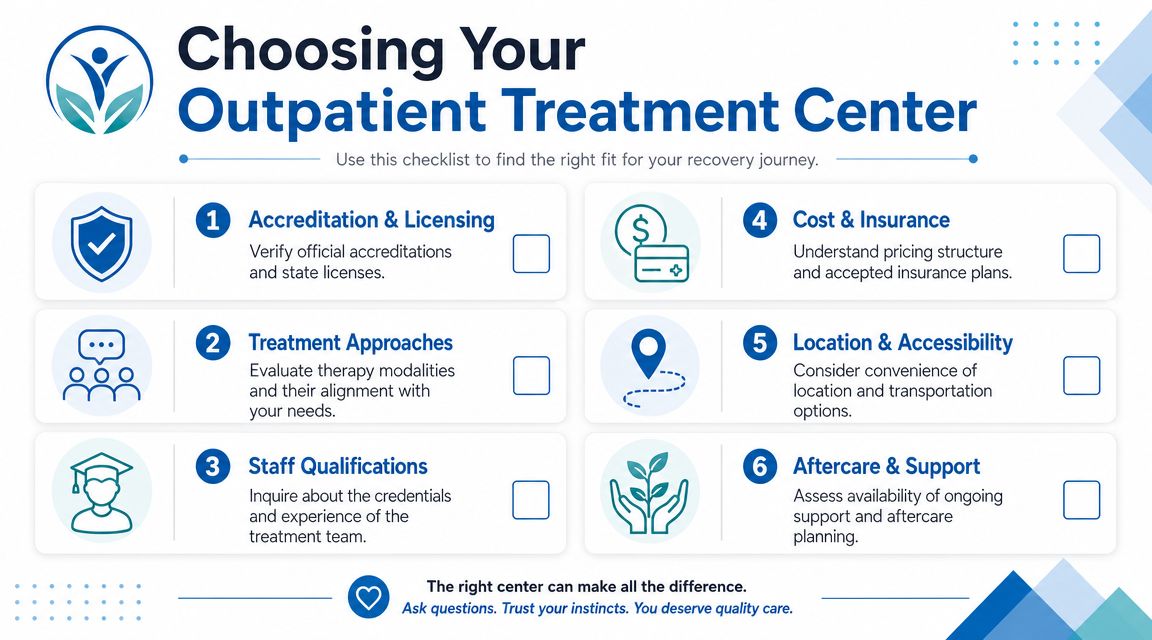
The best way to evaluate addicare in garland tx, or any outpatient program in Dallas, is to stop asking “Is this place good?” and start asking “Is this place right for this person, right now?” That shift changes everything.
A center can offer decent counseling and still miss the mark if it doesn’t fit the person’s risk level, mental health needs, schedule, or payment reality. Dallas-area families should use a tougher filter.
Ask about the care model, not just the services list
A long services page can create false confidence. A key question is how those services fit together. Does the center offer only basic outpatient visits, or can it move someone through a fuller continuum of care if symptoms intensify? A person leaving unstable use patterns often needs more than occasional counseling.
Look for a program that can clearly explain whether the person needs standard outpatient, IOP, or PHP. If the answer is vague, that’s a problem. Treatment planning should sound specific, not generic.
Make insurance and cost one of the first questions
Families often leave the money conversation for last because it feels uncomfortable. That’s backwards. Payment clarity belongs near the top of the list.
Use a simple screen:
| Decision area | What to ask |
|---|---|
| Insurance | Does the center accept the person’s PPO plan and verify benefits before admission? |
| Out-of-pocket cost | What will the family likely owe for the recommended level of care? |
| Administrative clarity | Will someone walk through the financial process step by step? |
When a center handles this well, families can focus on recovery instead of chasing billing answers.
Check whether mental health treatment is integrated
Substance use rarely travels alone. Anxiety, depression, trauma, anger, and relationship volatility often sit right beside it. A center that separates addiction from mental health too sharply usually makes treatment less effective.
Ask direct questions:
- Dual diagnosis capability: Can the program treat substance use and mental health together?
- Clinical coordination: Do therapists adjust the plan when mood symptoms, sleep issues, or trauma responses start driving relapse risk?
- Medication support: If opioid use is involved, does the program discuss medication-assisted treatment options when appropriate?
For this reason, many families should raise their standards. If the person needs support for cravings, withdrawal risk, or co-occurring mental health symptoms, a narrow counseling-only model may not be enough.
The right outpatient center should make life more manageable while treatment is happening, not simply assign sessions and hope the person figures out the rest.
Look at logistics like they matter, because they do
Convenience isn’t a luxury in outpatient care. It’s part of treatment success. If the program is hard to reach, hard to schedule, or hard to understand, attendance usually slips first. Motivation alone won’t fix a system that creates friction every week.
A useful checklist includes:
- Location fit: Is the center realistic for someone commuting from Dallas, Euless, Garland, or nearby areas?
- Schedule options: Are there treatment times that work for employment, school, parenting, or court obligations?
- Aftercare planning: What happens when the initial phase of treatment ends?
- Communication quality: Does the admissions team answer questions clearly and quickly?
Families don’t need a perfect center. They need a center that checks the right boxes for clinical depth, practical access, and financial clarity. That combination usually leads to better follow-through.
Take the Next Step Toward Recovery Today
The search for help often starts with one specific name, such as addicare in garland tx. That’s understandable. But the stronger move is to use that search as a starting point, then judge every program by what affects outcomes in real life. Can the center treat the full problem? Can the person attend consistently? Can the family understand the payment path before committing?
That checklist matters because recovery doesn’t happen in theory. It happens inside work schedules, family stress, insurance rules, transportation limits, cravings, shame, court dates, and mental health symptoms that don’t disappear just because someone is finally ready for help.
A good outpatient program should reduce chaos, not add more of it. Families should expect clear admissions guidance, real answers about cost and insurance, treatment options that match severity, and support for both substance use and mental health when both are in play.
For anyone in Dallas, Euless, Garland, or the wider DFW area who’s ready to stop guessing and speak with a team that can help sort out next steps, the most useful move is a direct conversation. Call (888) 385-2051 and get answers while the willingness to seek help is still strong.
Maverick Behavioral Health helps adults in the Dallas-Fort Worth area access structured outpatient care for substance use and co-occurring mental health conditions, including IOP, PHP, standard outpatient treatment, and medication-assisted treatment options. Most PPO insurance plans are accepted, and the admissions team can walk through coverage, scheduling, and the level of care that makes the most sense. To talk with someone now, call (888) 385-2051.